Measure the occupied space
A small balcony can look larger in an empty photograph than it feels with a chair pulled out. Measure the floor, door swing and the route you need to keep clear. Then mark the approximate footprint of the furniture you are considering. Include the space a person takes while sitting and getting up.
Check the building's rules and any restrictions that apply to your balcony. If you are uncertain about its condition or load capacity, obtain appropriate advice before adding heavy planters, storage or furniture. A compact floor area does not tell you what weight it can safely carry. Keep access, drainage and safety barriers unobstructed.
Choose the hour you want to spend there
Think about an ordinary use rather than a complete outdoor entertaining scene. You may want morning coffee, a short reading break or somewhere to sit after work. Notice the light, wind and temperature at that time. A position that is pleasant in the morning may be exposed later in the day.
Bring an existing suitable chair out for a short trial if conditions allow and the furniture is appropriate. Sit there before buying a set. Can you open the door? Is the view comfortable from the seat? Do you have somewhere stable to put a drink without balancing it on a railing?
Use furniture that can do one job well
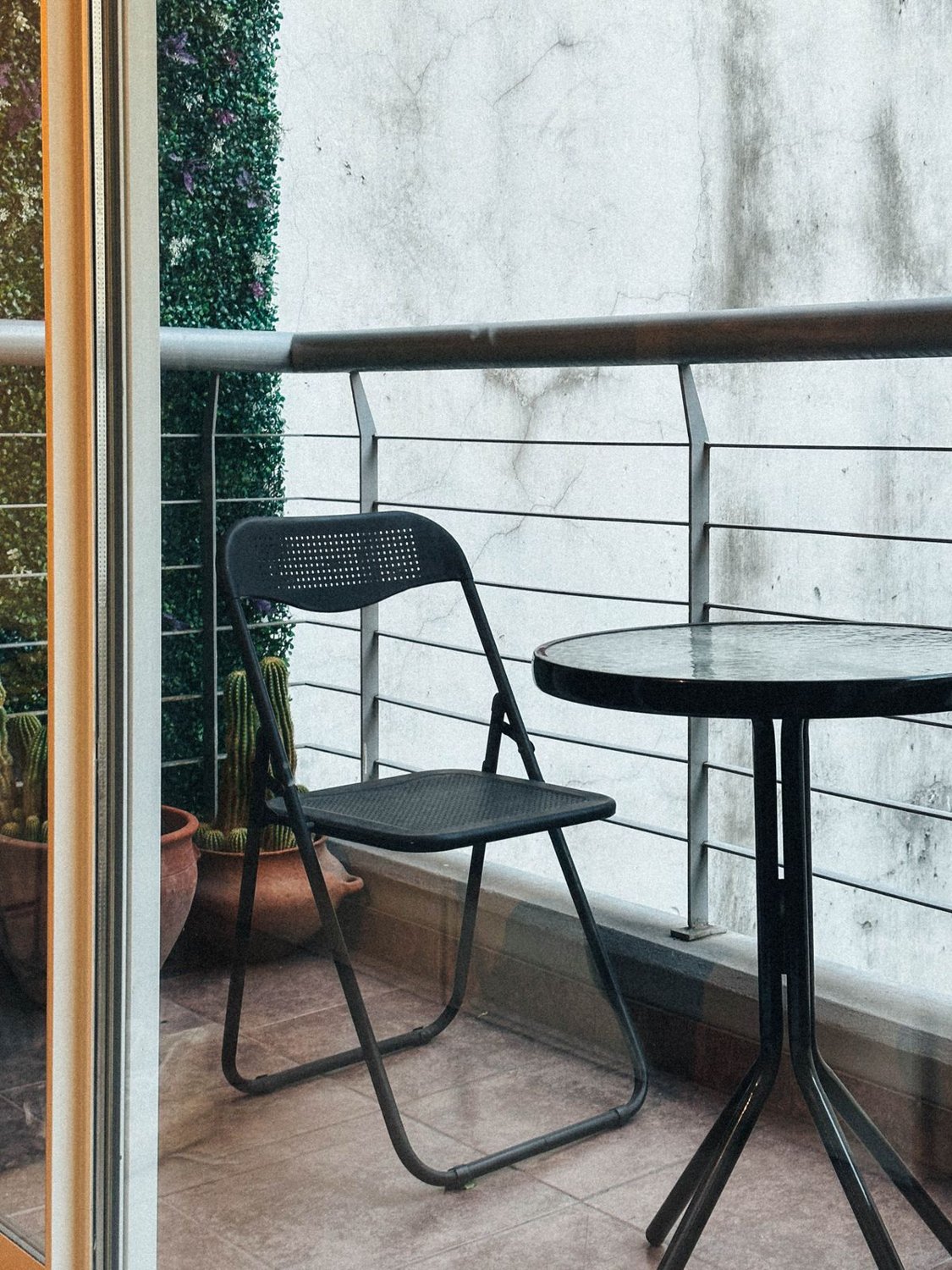
One comfortable chair and a small table may be more useful than two cramped seats purchased as a matching set. If you share the balcony, test both seats occupied. Folding pieces can help with storage, but only if you are willing to fold and put them away when needed.
Check that outdoor furniture is suitable for the conditions and follow the manufacturer's guidance for securing and storing it. Wind changes what can safely remain outside. Do not attach objects to railings or building surfaces without confirming that the method is allowed and appropriate. Keep lightweight loose items from becoming a hazard.
A table that folds from a railing may seem space-saving, but it still needs compatible fixings and permission where required. A small freestanding option can sometimes be simpler. Compare the actual usable surface rather than buying on the strength of a compact label.
Let plants follow the space
Start with a small number of plants suited to the conditions and your ability to care for them. Check the exact species if pets or children may reach them. Consider the weight of containers when wet, how you will water them and where excess water goes. An attractive row of pots should not block drainage or the door.
You do not need plants to screen every part of the balcony. A little open space can make it easier to move and maintain. If privacy is a concern, investigate permitted options that are suitable for the site rather than fastening improvised screens to a barrier.
Rehearse with two people
If the balcony is shared, use it together before committing to furniture. One person sitting comfortably can conceal the fact that the second chair blocks the door. Try getting up while the other person remains seated, carrying a cup back inside and opening any storage you plan to use. These ordinary movements reveal more than measuring the chair frames alone.
You may decide that two smaller chairs work, or that one chair and an occasional folding seat suit the way you use the space. It is also reasonable for the balcony to serve one person at a time. The important thing is to make that choice consciously rather than squeezing in a dining arrangement that prevents anyone from relaxing.
Keep indoor storage in the plan
Cushions, blankets and small accessories need somewhere to go when conditions change. If they have no home indoors, they may become a damp pile outside or a permanent obstruction by the door. Choose fewer objects and a clear storage place before adding more.
Use the balcony for a week before decorating further. Notice whether the chair moves, whether the table is useful and what you keep carrying in and out. The arrangement is working when you can step outside for that ordinary hour without first rebuilding the space. Leave room for the balcony to remain simple.