Put the itinerary into clothes
Write down the actual parts of the weekend: travelling, walking during the day, dinner and the journey home. Add any specific dress requirement. This small outline is more useful than beginning with a suitcase and filling it until the space disappears.
Check the forecast close to departure and make a sensible allowance for change. Think about the conditions you will spend time in, not only the temperature on a weather app. A weekend mainly indoors asks different things from long outdoor walks. Keep required protective or specialist clothing separate from the fashion edit.
Start with the most demanding outfit
If dinner has a dress code or an event needs a particular outfit, solve that first. Try it on with shoes, underwear and the bag you will carry. Then see which of those items can work elsewhere in the weekend. A jacket may cover dinner and travel; a highly specific shoe may have only one job.
Choose the daytime outfit next. Use familiar pieces that you know work together rather than packing something new and hoping the destination will supply an occasion for it. A trip is easier when the clothes do not need repeated adjustment or an unfamiliar care routine.
Repeat deliberately
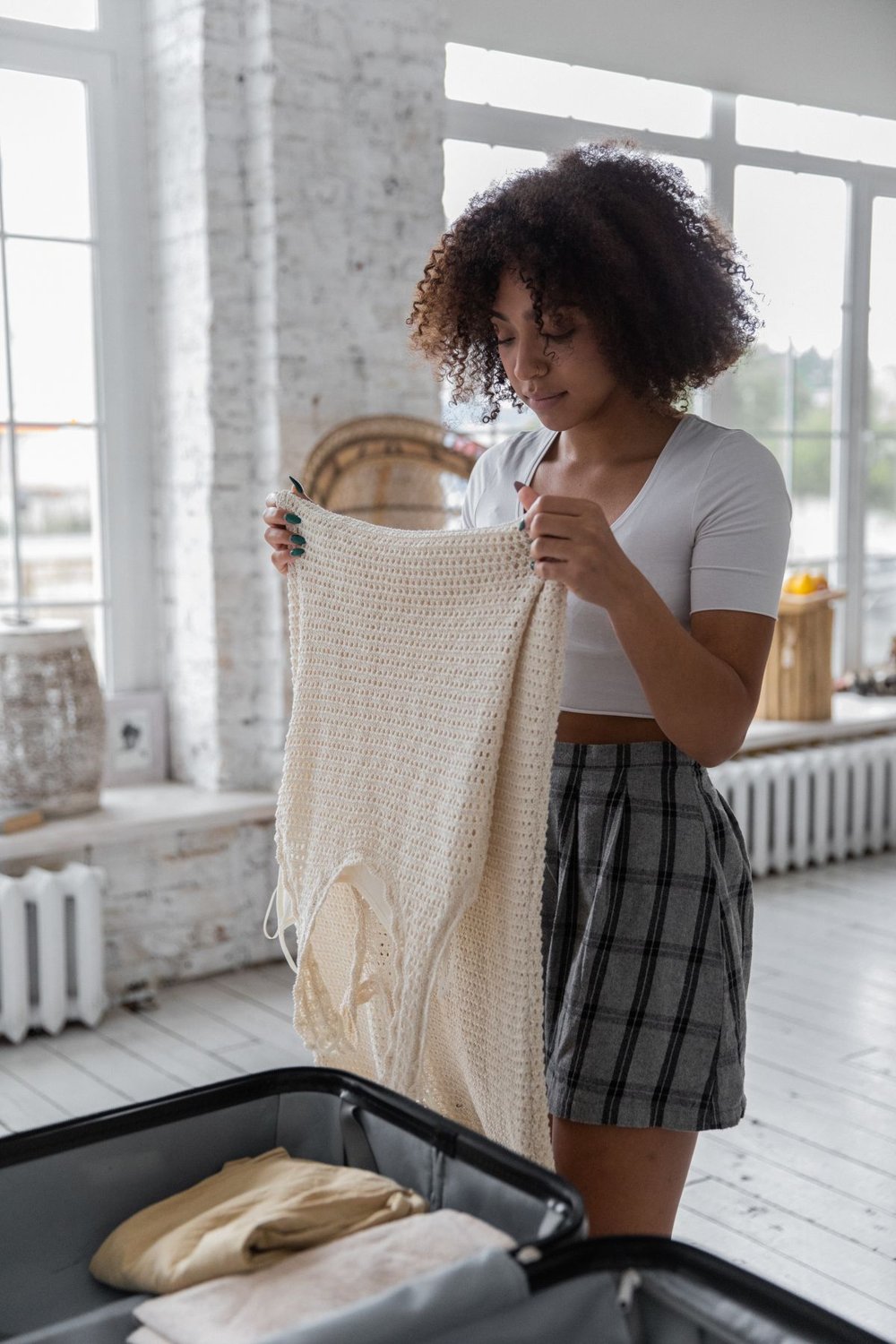
Two or three outfits do not require entirely separate garments. A pair of trousers can appear with different tops; a knit can go over a dress for travel. Lay the combinations out so that you can see the repeats. If a piece only works with another item you have not packed, either complete that combination or leave it out.
For example, dark trousers, a shirt and a lightweight knit may cover the journey and a casual dinner with a change of jewellery. A second top can serve the following day. This is an illustration, not a universal list: your activities, weather and preferences decide the actual pieces.
Let footwear set a limit
Shoes occupy a large amount of space, so choose them early. Wear the bulkier suitable pair for travel if that is comfortable, and pack only a second pair with a clear purpose. Check that each works with the planned hems. Do not bring an extra pair solely because it is the usual final addition to every suitcase.
Keep shoes separated from clean clothing with appropriate covers or bags. Follow care guidance, and avoid sealing damp footwear among clothes for a long journey. Leave enough room to repack after the trip, when everything may not fold as neatly as it did at home.
Add the small things by outfit
Underwear, socks and any hosiery should follow the clothes you selected. A pale top may need a particular underlayer; a shoe may require a sock thickness you did not initially pack. This is why trying complete outfits is more reliable than counting tops in isolation.
Add toiletries and other necessities according to the trip, checking official transport rules where relevant. Keep the first-night items accessible. If you arrive late, being able to find sleepwear without unpacking everything is worth a little planning.
Try a three-outfit rehearsal
Place the travel outfit on one side of the bed and the following day’s clothes beside it. Then add the dinner change. Use the same jacket in both groups if that is the plan, moving it between them rather than mentally assuming it fits. This makes any missing underlayer, unsuitable shoe or awkward colour relationship visible before packing.
Now remove one top and see whether the remaining combinations still cover the weekend. If the answer is yes, you have found an optional item. If the answer is no because one outfit will be dirty, wet or inappropriate for the second use, keep the extra with a clear reason. Repeating clothes should remain realistic rather than becoming a contest to travel with the smallest possible bag.
Photograph the two or three finished combinations if that helps you remember them. At the destination, the photograph can save you pulling everything out to rediscover what you intended. Add a brief note about the shoes or jewellery if they were not visible in the picture. The record is especially useful when the same neutral garments appear in several similar combinations.
Remove one hypothetical item
Before closing the bag, identify the garment included for a vague possibility. Ask what event would make you use it and whether something already packed could do the same job. Keep it if there is a real reason. Otherwise, allow the space to remain empty. A little spare room makes the bag easier to use and leaves the weekend less tied to managing its contents.