Choose the activity before the furniture
Think about what getting ready involves for you. If it is brushing hair and putting on earrings, a small surface beside a mirror may be enough. If you apply makeup sitting down, you need comfortable knee space and somewhere to set tools safely. Start with that use rather than searching for a matching vanity set.
Look at a corner you already have: the end of a chest, a section of desk or a narrow table. Try the activity there before buying anything. A surface can look suitable and still be too high, too shallow or too far from the light once you sit in front of it.
Place the mirror at your working height
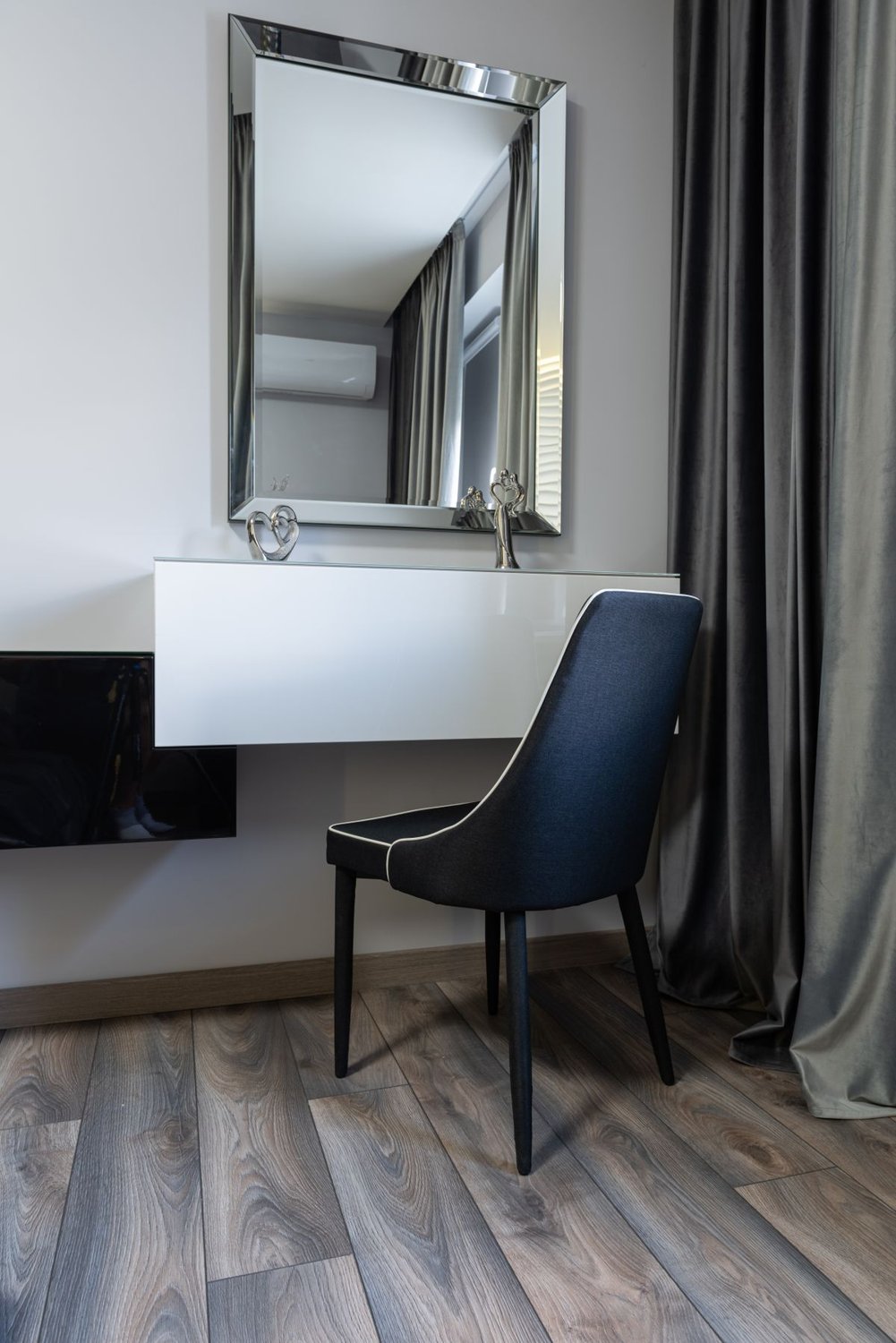
Use the mirror in the posture you expect to keep. A wall mirror mounted for standing may be awkward from a chair. A small adjustable mirror can solve that without requiring a second large piece. Make sure it is stable and that the surface beneath it will not shift as you reach for products.
Check the lighting at the time you normally get ready. Daylight may help in the afternoon while the same corner is dark on a winter morning. A suitable lamp can be useful, but consider safe cable placement and follow its installation and use instructions. Avoid creating a trailing lead across the route through the room.
Keep only the active collection here
Gather the objects you reach for most days and see how much space they take. A shallow tray can define their area without becoming a display of everything you own. Keep backups and occasional products in other suitable storage. Leave room to put something down during use; a fully occupied surface is difficult to work on.
Small jewellery needs a secure place away from the edge. A dish is useful for temporarily removing earrings, but delicate or valuable pieces may need their own appropriate storage afterwards. The corner should support the routine, not become a permanent stopping point for objects that belong elsewhere.
Let the room keep its other purpose
If the surface is also a desk, use a container you can lift away in one movement. If it is in a bedroom, leave a clear route to the bed and cupboard. A stool that fits underneath may be more useful than a chair that must be moved every night.
Test the arrangement for a few days before adding decoration. Notice what you keep carrying across the room and what never gets touched. That evidence can tell you whether a drawer divider would help or whether the whole setup belongs a little closer to the window.
Finish with one useful detail
Once the position works, you may want a small object or picture that makes the corner feel like part of the room. Choose it because you enjoy it, not to fill every gap. A clear surface can be the most valuable part of a getting-ready area. The finished corner should be easy to use, easy to clear and modest enough that it leaves the rest of your home alone.