Choose one visible pressure point
Look for the place that has become harder to use: the chair covered in clothes, the drawer that no longer closes or the surface where post has gathered. Choose one. An end-of-month edit works best when its scope is small enough to finish in the time available.
Notice why things arrived there. A pile may represent repairs, decisions, objects without storage or tasks you have been avoiding. Clearing it without understanding that reason can produce the same pile again next month.
Give each item a destination
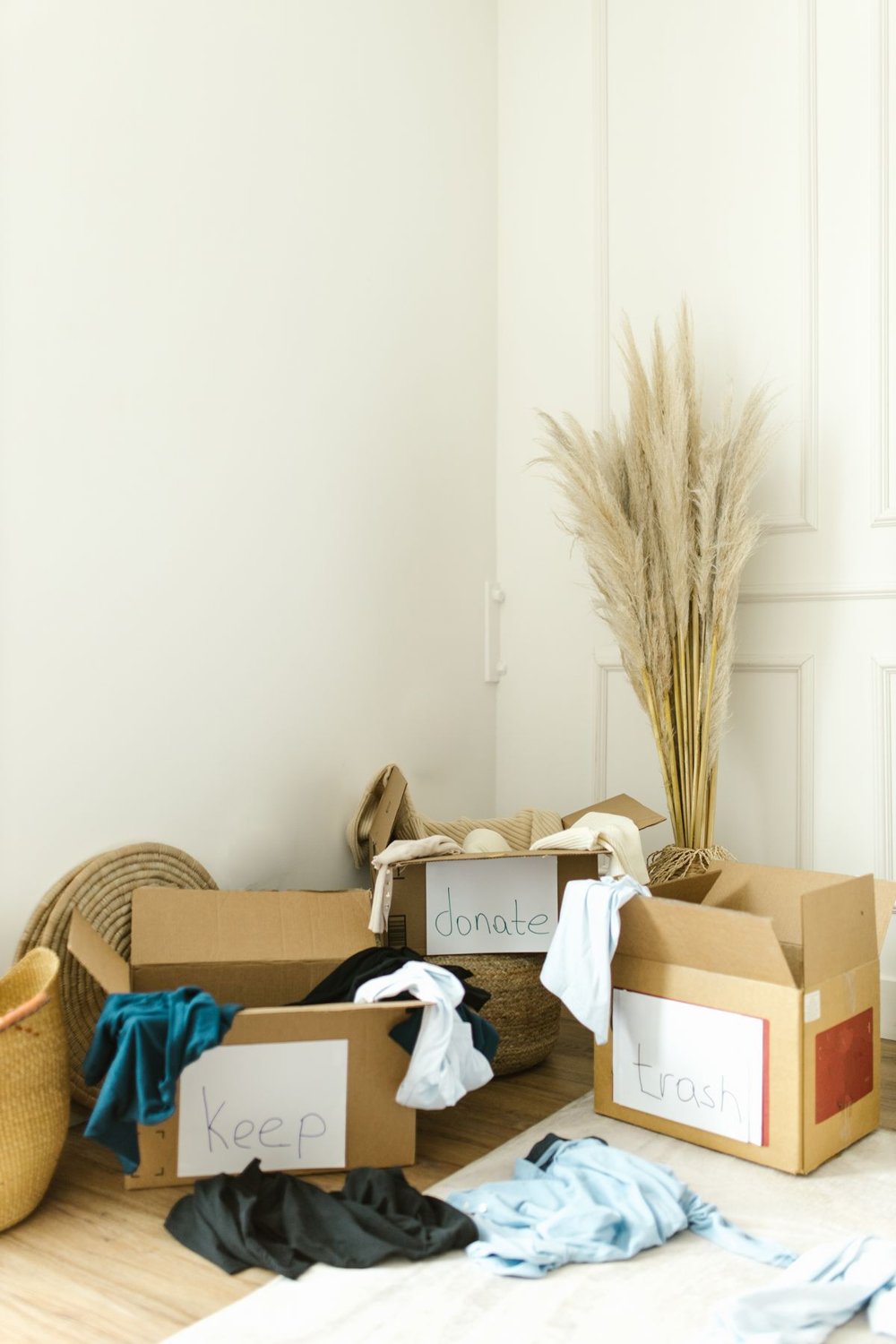
Return things that have a home. For the rest, decide whether they need a place, an action or a departure. A dress waiting for a hem adjustment belongs with a repair plan, not back among ready-to-wear clothes. A receipt needed for an expense claim belongs with that task.
Keep the decisions proportionate. You do not need to redesign the whole storage system because one shelf is crowded. Move a small group, reduce an unnecessary duplicate or give a recurring item a more accessible spot.
Close one unfinished loop
Choose a task that can genuinely be completed: book the repair, answer the letter, return the borrowed item or arrange the donation. Moving it to a new list is useful only if that list leads to action. Completion frees both physical space and the attention repeatedly spent remembering it.
For purchases still within a return period, check the seller's current conditions and dates promptly. Do not let an undecided item remain in its bag simply because dealing with it is inconvenient. The available options can change while it waits.
Separate maintenance from a bigger project
Some discoveries will be larger than a monthly edit can handle. A filing system that no longer works, a wardrobe full of unsuitable clothes or a room awaiting repairs deserves its own time. Write the project down with a clear first step, then return to the small area you chose. Opening the whole problem now may prevent either task from being finished.
For recurring clutter, try changing the point where it enters. Post can be sorted near the door before it reaches the table. A place for worn-but-wearable clothes can keep them from joining clean laundry. A bag for items leaving the home can make the next donation or return easier to carry out.
Only add storage after identifying what it needs to hold. A new box can conceal an unresolved mixture just as easily as it can organise one. Measure the objects and the space, and make sure the container can be reached and opened where you intend to keep it.
At the next review, ask whether the small change helped. If the same pile returned, revise the arrangement rather than blaming yourself for failing to maintain it. The recurring pattern is information about the system and the routine around it.
Stop with something improved
Finish by restoring the chosen area to use. Leave a short note about any remaining action and when you will address it. Avoid opening another cupboard simply because the first one went well; finishing within the intended time helps the habit remain manageable.
The following month may call for a different area, or no substantial edit at all. The purpose is to notice small accumulations before they become a larger obstacle, not to create a permanent obligation to reorganise a home that is already working.