Work with one shelf at a time
A linen cupboard can hold items from several versions of a household: sheets for a bed that has gone, towels kept for guests who rarely stay and spare covers with no matching size. Start with one shelf so you can make decisions without covering every bed in the house.
Identify sizes before folding. A neatly folded sheet is still inconvenient if you cannot tell which bed it fits. Keep labels visible where possible or add a simple shelf marker. If two sizes look alike, separate them rather than relying on memory each time you change the bed.
Store a complete change together
Keep the pieces you normally use for one bed near one another. That might mean a sheet, cover and pillowcases as a small stack. You do not have to fold everything into a pillowcase if that makes it bulky or difficult to see. The method should let you remove the set without dismantling several others.
Check the cupboard depth. Deep shelves can hide a second row that is hard to reach. Put less-used items behind only when you can still identify and retrieve them. Otherwise, a shallower stack with some unused space may function better than a tightly packed shelf.
Decide how many spares are useful
Think about your washing routine and drying space. A household that dries bedding quickly has different needs from one that depends on limited indoor drying. Keep enough to manage an ordinary delay without assuming that every available shelf must be filled.
Set worn items aside for a clear decision. They may be suitable for a particular household use or an accepted textile collection, depending on condition and local options. Do not create a large permanent pile of just-in-case cloths unless you actually use them. The cupboard should make the next linen change easier, not store every past one.
Give towels a reachable position
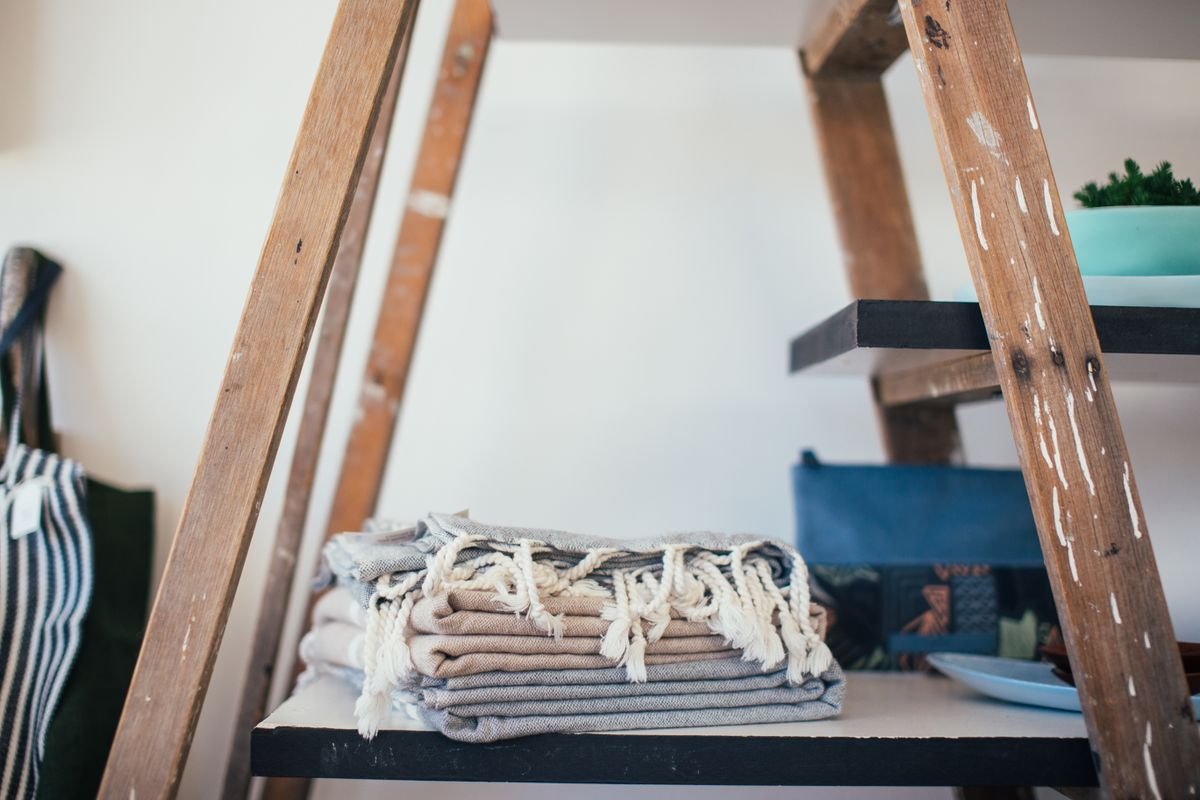
Put everyday towels at a height and location the people using them can manage. A stack that topples when the bottom towel is removed is too tall or too compressed. Consider smaller stacks by size or purpose. Rolled towels can work in some spaces, but folding may use a narrow shelf more efficiently; test with the towels you have.
Return only clean, fully dry textiles to storage. Follow their care instructions and keep the cupboard's conditions suitable. If the space feels damp, address that problem rather than adding fragrance to disguise it. Avoid placing strongly scented products beside linen merely to make opening the door feel luxurious.
Make an awkward shelf work
Suppose a shelf is deep enough for two stacks but only the front one is visible. One option is to store everyday sets at the front and a clearly identified occasional set behind. Another is to use a suitable removable container that lets you draw the whole group forward. Test whether you can lift it comfortably when full; a large box of linen can be heavier than it looks.
Do not place the most frequently needed set so high that retrieving it becomes a balancing act. Rearranging by frequency can be more useful than grouping every colour together. If the lower shelves are easy for everyone to reach, they may be the right home for towels even when the cupboard originally seemed designed for something else.
When space remains tight, compare the contents with the beds and people currently in the home. Removing one genuinely redundant set can create more useful access than buying several organisers. Keep any sentimental textiles separately if their purpose is remembering rather than daily use, so the practical collection remains clear.
Make the next change the test
After arranging the shelf, collect a full change as though you were about to use it. Can you find the correct size quickly? Does another stack fall forward? Is there room to return the clean set later? Adjust the arrangement based on that small rehearsal.
Leave a little breathing room between groups. You should not need to compress every towel to close the door. A cupboard with fewer accessible items can be more useful than one holding more than the household can comfortably manage.