Narrow the question before testing
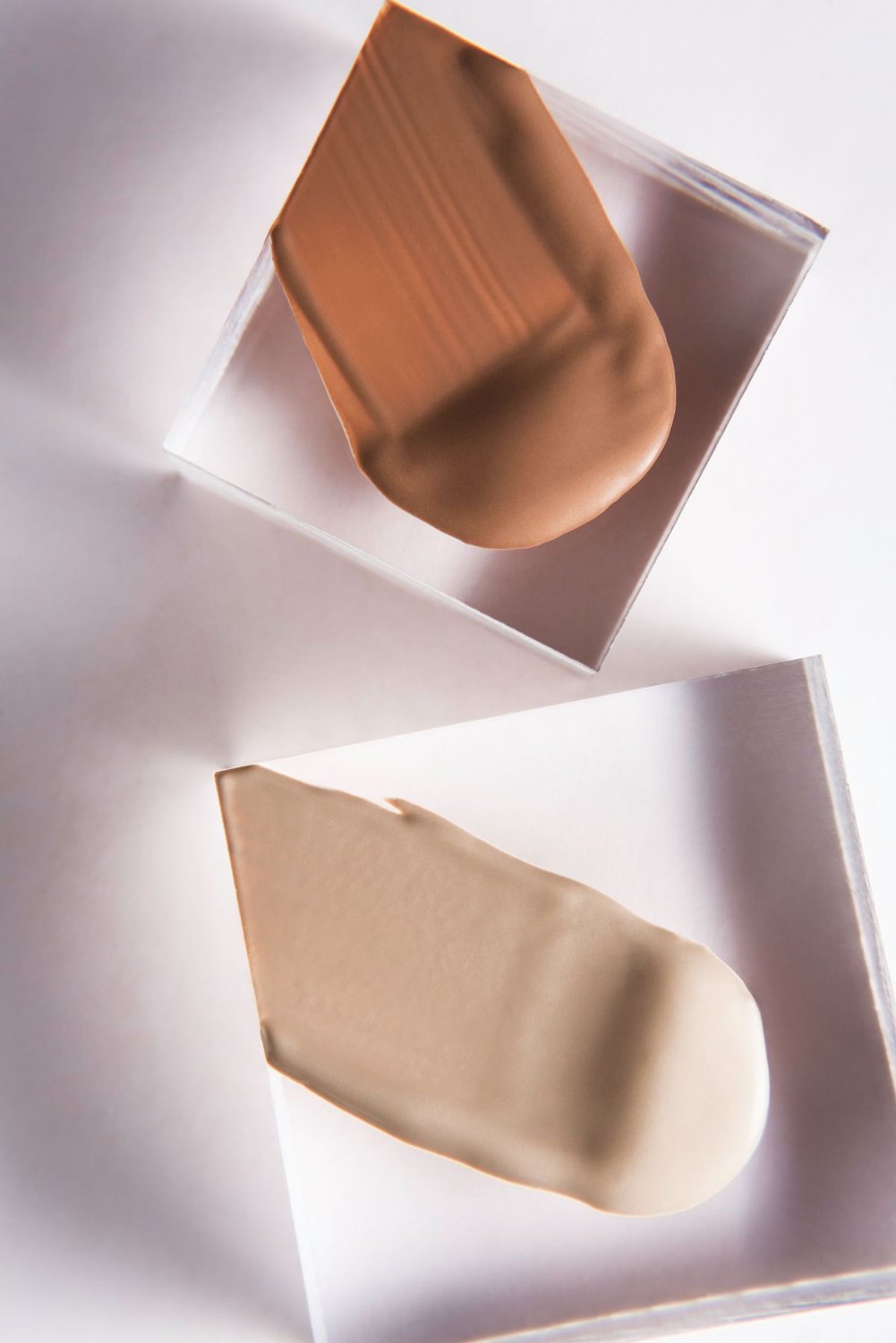
Decide what you want from a base before examining shade names. Sheer coverage lets more of your own skin show through; a more opaque formula makes a mismatch easier to notice. Finish matters too. A shade that seems promising in one texture may feel wrong in another even when the colour is close.
Ask for help selecting two or three likely shades rather than covering your face with a long sequence. Keep their names or numbers in a note. Product names are easy to confuse once several similar bottles have been opened, and remembering that one was the second swatch is not much use later.
Compare beside uncovered skin
Use the retailer's hygienic testing procedure and avoid applying shared testers directly to your face. If suitable samples are available, trying them at home gives you more control over the light and application. Follow the product's directions and do not test on irritated skin.
A small comparison near the jaw can help you see how the shade relates to both face and neck. The point is to examine the boundary beside uncovered skin, not to hide it immediately under a large application. Your hand may be a different colour from your face, so a hand swatch mainly tells you about texture and an initial colour range.
Look from a little distance. A close mirror is useful for blending, but shade is easier to judge when you can see the whole face. If all the candidates seem wrong, broaden the range rather than choosing the least unsuitable one because you have already spent time at the counter.
Let the formula settle
Follow the brand's suggested testing approach and give the applied product time before deciding. Note whether its appearance changes as it settles and whether it sits comfortably with the products you normally use underneath. There is no universal waiting time that resolves every formula, so a sample worn through an ordinary part of your day can be more informative than a rushed purchase.
Check near daylight as well as under the shop lighting. If possible, leave the counter and look again before buying. You do not need to make a decision while someone is waiting for an answer.
Separate a shade problem from a texture problem
Suppose two samples both look close to your skin at first. One appears visibly pink beside the neck, while the other matches there but gathers around a dry-looking area. These are different observations. Changing the shade of the second formula may not solve the way it sits, and changing the application of the first may not remove the colour difference. Write each observation separately so that the next comparison answers the right question.
Try using the same small amount and the same preparation for each sample, following the directions. Keep the rest of the makeup simple while you compare. A strongly coloured blush or bronzer can make it harder to see the base itself, particularly when you are already unsure about the undertone. You can add the normal routine once you have narrowed the choice.
If a shop assistant suggests a different formula, ask which part of your observation that change is intended to address. The conversation becomes more useful when you can describe what happened after application instead of saying that the whole result was wrong. You are allowed to leave with another sample or with no purchase.
Also consider where you plan to apply the base. A light layer across the centre of the face may need a different level of precision from a full, opaque application extending over a larger area. Tell the assistant how you actually use foundation. That context is more useful than choosing a shade for an application you do not intend to repeat.
Keep the shade in context
A base colour may suit one season or level of coverage better than another. That does not automatically mean you need several bottles. You can also decide to use less coverage or pause the purchase until a clearer need appears.
Write down the exact product and shade once you have found a good option. Record what you liked: the colour beside your neck, the finish after a few hours or the way it worked with your usual routine. Those observations are more useful for a later comparison than a promise of a flawless result.