Begin with the pencil you can control
A newly sharpened wooden pencil and a rounded retractable one feel different in the hand. Follow the product's instructions for sharpening or extending the tip, and keep the working end clean. Choose a product specifically intended for the eye area. A lip pencil in a similar colour is not a substitute.
Sit or stand somewhere stable, with enough light to see comfortably. Resting an elbow on a secure surface can make a small movement easier. Do not apply eye makeup in a moving vehicle. The FDA highlights the risk of injury from applicators when movement is unexpected.
Build a short line
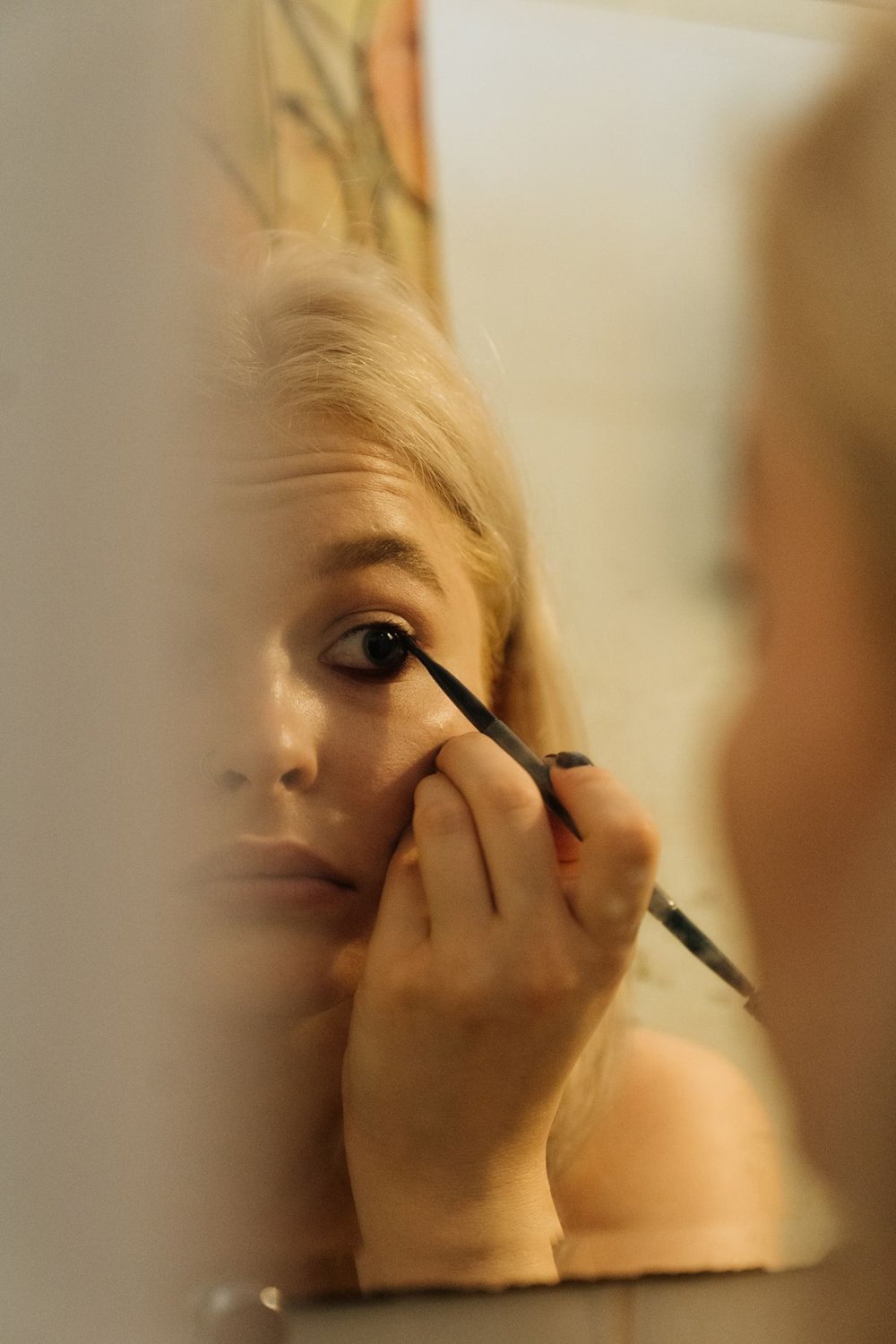
Instead of drawing one long stroke, try a few small marks close to the upper lashes, keeping the product away from the eye itself. Connect only as much as you want. A line does not have to continue to both corners or end in a wing. You can leave the lower lid alone if that produces the result you prefer.
Check with the eye open. The line's appearance changes when the lid moves, so a closed-eye view cannot tell you everything. Work lightly rather than pushing hard to force colour from a dry pencil. If the product is not applying as directed, check its condition instead of improvising with heat or added liquids.
Soften without spreading it everywhere
If the formula is designed to be blended, use its suggested tool or a clean suitable brush to soften the outer edge. Keep the movement small. A broad sweep can turn a narrow line into a large patch that needs removing. Some formulas set quickly, so learn the application from the product guidance rather than assuming every pencil behaves alike.
Brown, grey or muted plum can give a different impression from black, but none is automatically softer on every person. The amount and edge matter too. Try reducing the line before buying a new colour to solve a result that feels too strong.
Stop when the eyes relate to each other
Check both eyes from a normal distance. Faces are not perfectly symmetrical, and chasing identical millimetres can lead to more product than you intended. If one area needs correction, remove that small area as the product directions allow rather than adding to the other eye repeatedly.
Keep eye cosmetics personal. The FDA advises against sharing and says to stop using eye cosmetics during an eye infection and discard those used when it occurred. If a product causes irritation, stop using it. The useful routine is a controlled, comfortable application that you can leave alone when it is finished.