Define today's work
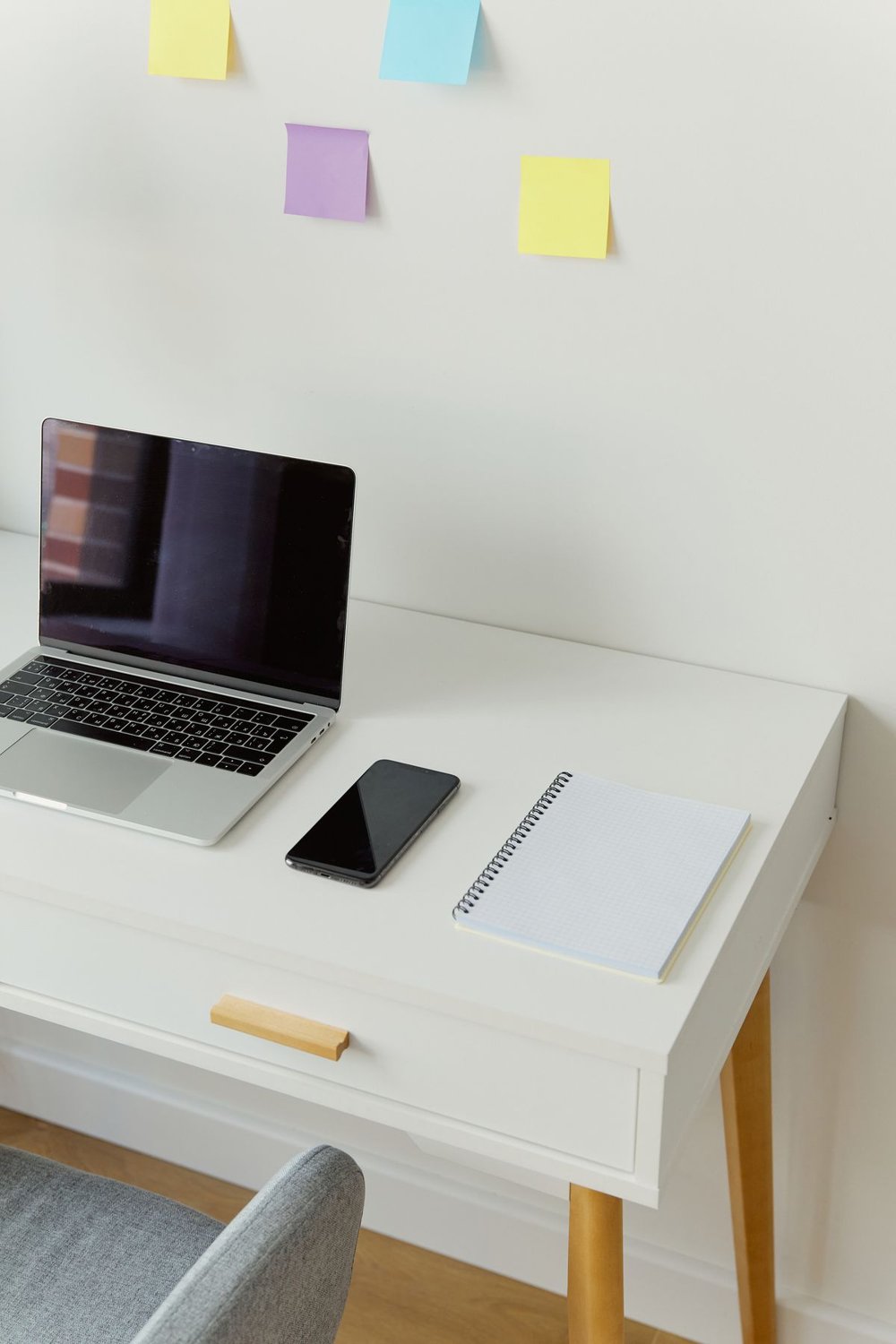
A desk used for writing needs a different clear area from one used for sewing, drawing or sorting paperwork. Decide what you are about to do before removing everything. You may need room for an open notebook beside a laptop, or a continuous surface large enough to spread out a project.
Keep the tools for that task within easy reach. Put unrelated items aside in a single temporary tray while you sort them, rather than distributing them across the floor and nearby chairs. A clear desk is less useful if the route to it becomes cluttered.
Give loose papers a next action
Separate papers that require a response from papers kept for reference. A receipt to file and a letter to answer are different tasks, even if both are made of paper. Use a small folder or tray for each purpose if needed, and avoid inventing more categories than you can maintain.
Dispose of documents appropriately, taking care with personal information. If a paper is still needed, keep it somewhere you can find it again. Clearing the visible surface should not mean losing the information required for tomorrow's work.
Reduce the small obstacles
Check the objects that repeatedly interrupt you. A cable that falls behind the desk, a pen that does not work or a lamp crowded by storage can consume attention out of proportion to its size. Deal with one of those obstacles while the surface is clear.
Keep drinks away from papers and electronics, and avoid stretching cables across places where they can be caught. Arrange the screen, chair and working materials so that you can use them comfortably; if the setup causes persistent discomfort, seek appropriate ergonomic advice rather than treating tidiness as the solution.
Leave a place to stop
At the end of the session, collect the active materials together and write down the next step. You do not need to erase every sign of work. A project left in a clear, contained state can be easier to restart than one packed away into several unrelated drawers.
Reserve a few minutes for returning tools and removing things that do not belong. This small close makes the next clear-up shorter and helps the desk remain a place for work rather than a holding area for everything without a home.