Let the coat be the main shape
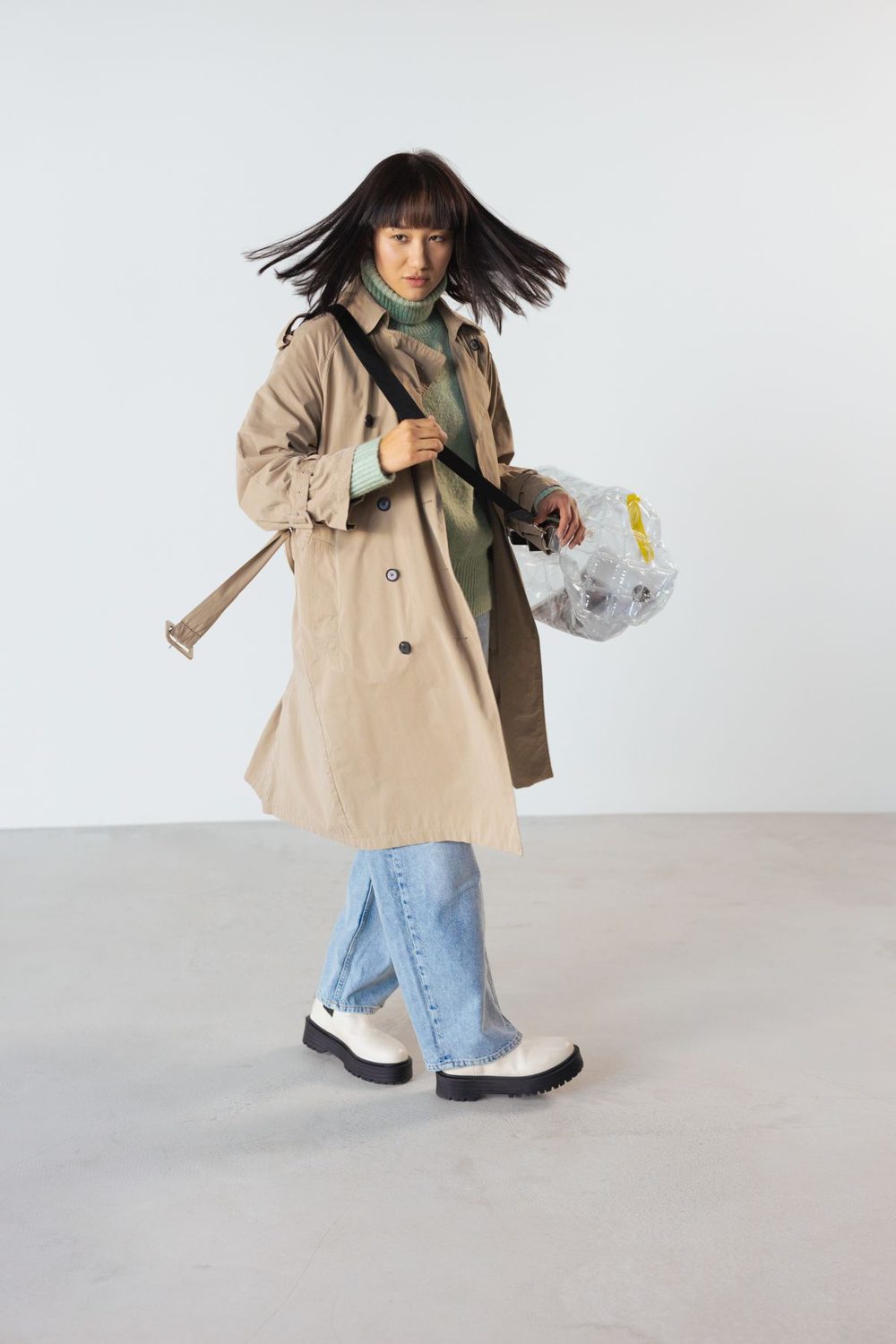
A trench coat often has enough detail of its own: lapels, a belt, buttons and pockets. A plain shirt with jeans or a simple knit with trousers can give those details space. You do not need to add a printed scarf or several accessories merely because the outfit underneath is quiet.
Put the coat on open first. Notice how much of the base outfit remains visible and where its hem falls. A long trench can frame a narrow strip of colour; a shorter one reveals more of the lower half. Choose the inside clothes with that actual view in mind.
Decide what to do with the belt
Fastening the belt changes the coat's shape. Leaving it loose preserves more of the straight outline. If you prefer it unfastened, secure or contain the ends so that they do not trail or catch. Check any belt loops and the way the fabric gathers before assuming the belt must be tied tightly.
A belt that pulls the coat into uncomfortable folds is not improving the fit. The coat should still allow you to sit and reach. Try it over the layers you will wear, because a fastening that works over a T-shirt may feel quite different over a jumper.
Keep the lower half usable
Jeans and flat shoes can make a trench feel ordinary enough for errands. Tailored trousers create another version. In either case, check the trouser hem with the shoe and consider the ground you will cover. The coat's association with rainy weather does not tell you whether the specific fabric is water-resistant; use the maker's information when that matters.
Look at the coat hem on steps and when seated. A long coat can be elegant in motion but requires enough room to avoid trapping fabric. Keep loose ends clear when using transport or handling luggage.
Check the outfit indoors
Take the trench off once before leaving. The simple clothes underneath should still be a combination you are happy to wear. A coat can supply structure outdoors, but it should not be required to hide a fit problem or an unfinished layer.
The most useful trench outfit may be one you repeat often. A familiar base leaves you free to notice how the coat works with the day's weather and journey, rather than inventing a new arrangement each time.