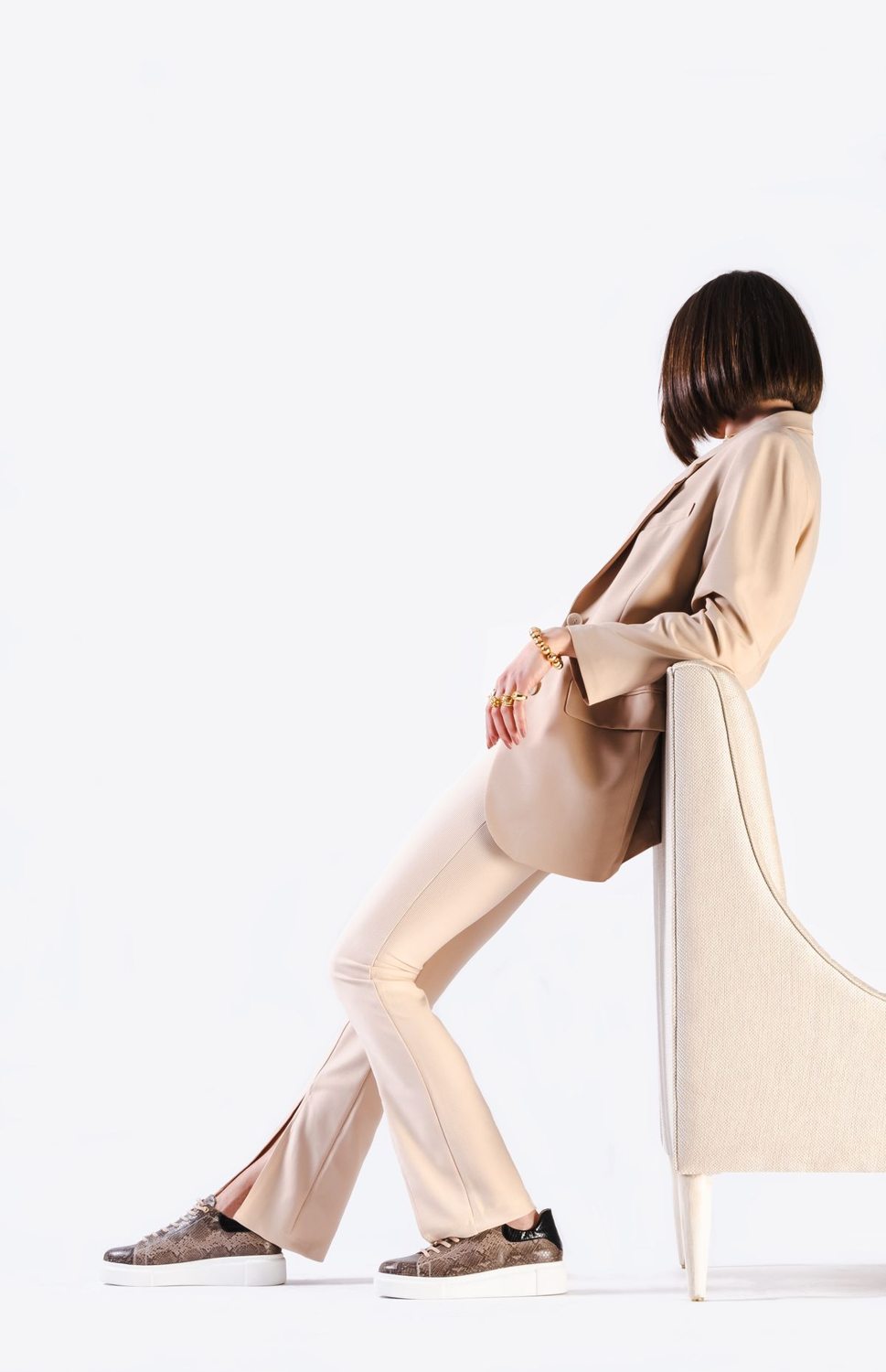
Choose a family rather than an exact match
Tonal dressing works with related colours across an outfit. That can mean several shades of beige, different greys or a group of blues. It does not require every piece to have come from the same dye batch. In fact, a small difference can make the clothes easier to see as separate parts.
Start with two pieces you already like together. They might be a cream knit and tan trousers, or a pale blue shirt and dark denim. Add the next layer only after seeing those two on the body. It is easier to judge a relationship between real areas of fabric than a row of small swatches.
Make the differences clear enough
Two almost identical shades can be pleasing, but they can also look like a failed match if that is not what you intended. A larger difference in depth often makes the choice clearer. Alternatively, use contrasting textures: a smooth skirt with a ribbed knit, or a woven jacket with a soft shirt.
Check the clothes under the light in which you expect to wear them. Some fabrics shift in appearance between daylight and indoor light. This is especially noticeable when several pale or dark neutrals sit together. There is no need to chase perfect consistency, but it helps to know what the combination will look like away from the wardrobe.
Give the shape its own attention
Related colours can make the outline more noticeable because there is less contrast between garments. A long top with wide trousers creates a different shape from a short top with the same trousers. If the outfit feels shapeless to you, adjust a hem or the fit of a layer before adding a contrasting belt.
A belt can create a useful line, but it is not compulsory. An open jacket, a visible shirt cuff or a change in fabric weight may provide enough definition. Keep the arrangement comfortable when sitting; the purpose of a tonal outfit is not to hold every fold in place.
Let shoes and bags join or interrupt
Accessories in the same colour family can extend the effect. A darker shoe can anchor a pale outfit, while a different colour can create a deliberate interruption. Neither choice invalidates the tonal idea. Decide whether you want the accessory to recede or attract attention.
You do not need to buy matching shoes, a bag and jewellery to make this work. Try what you own first. A familiar brown bag may belong comfortably beside cream and camel, while black footwear can give a grey outfit a firmer ending.
The finished look should still feel like clothes you can live in. If the palette requires constant worry about marks or exact matching, use it for the occasions where that attention feels worthwhile and choose an easier variation for the rest of the week.