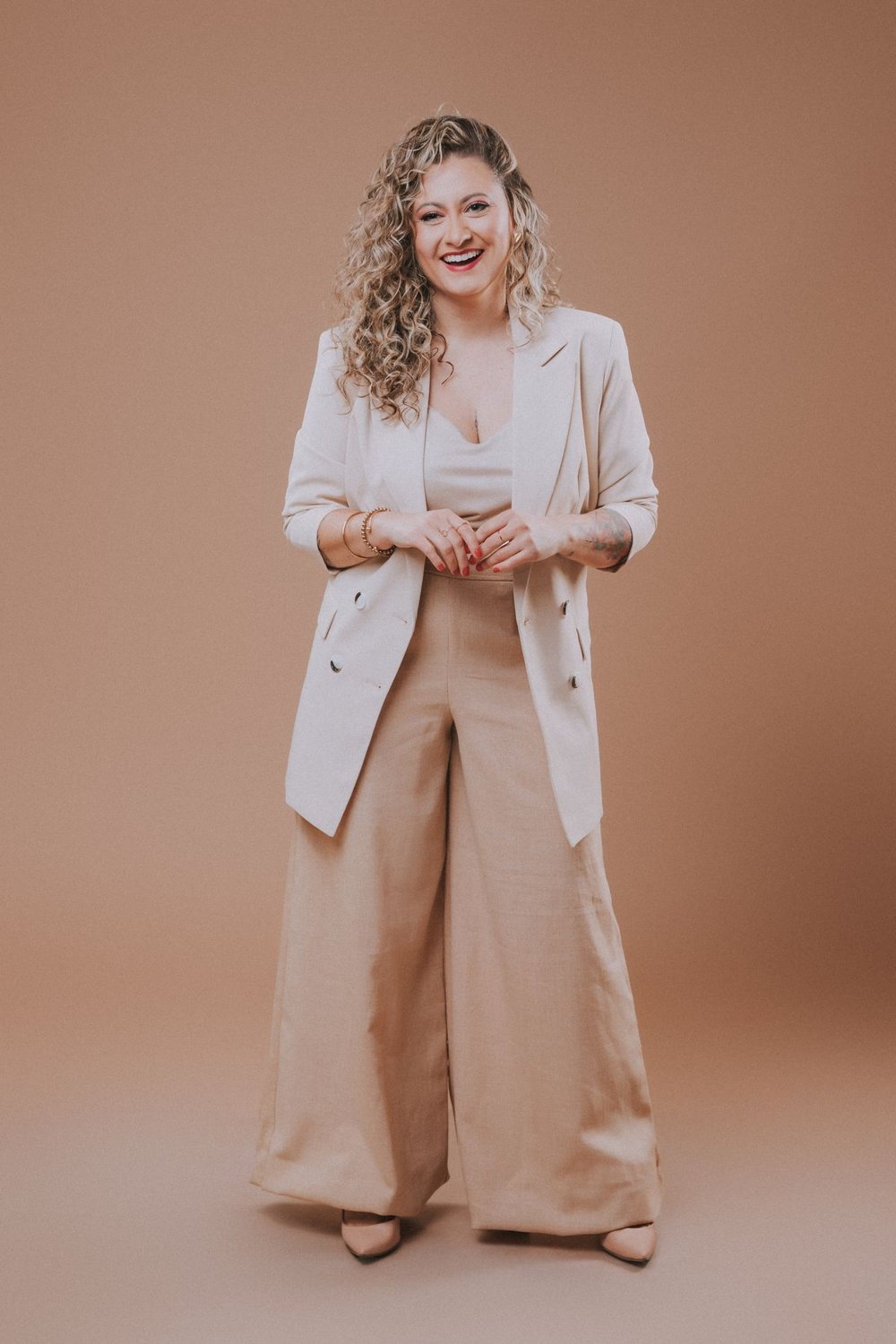
Put the shirt on first
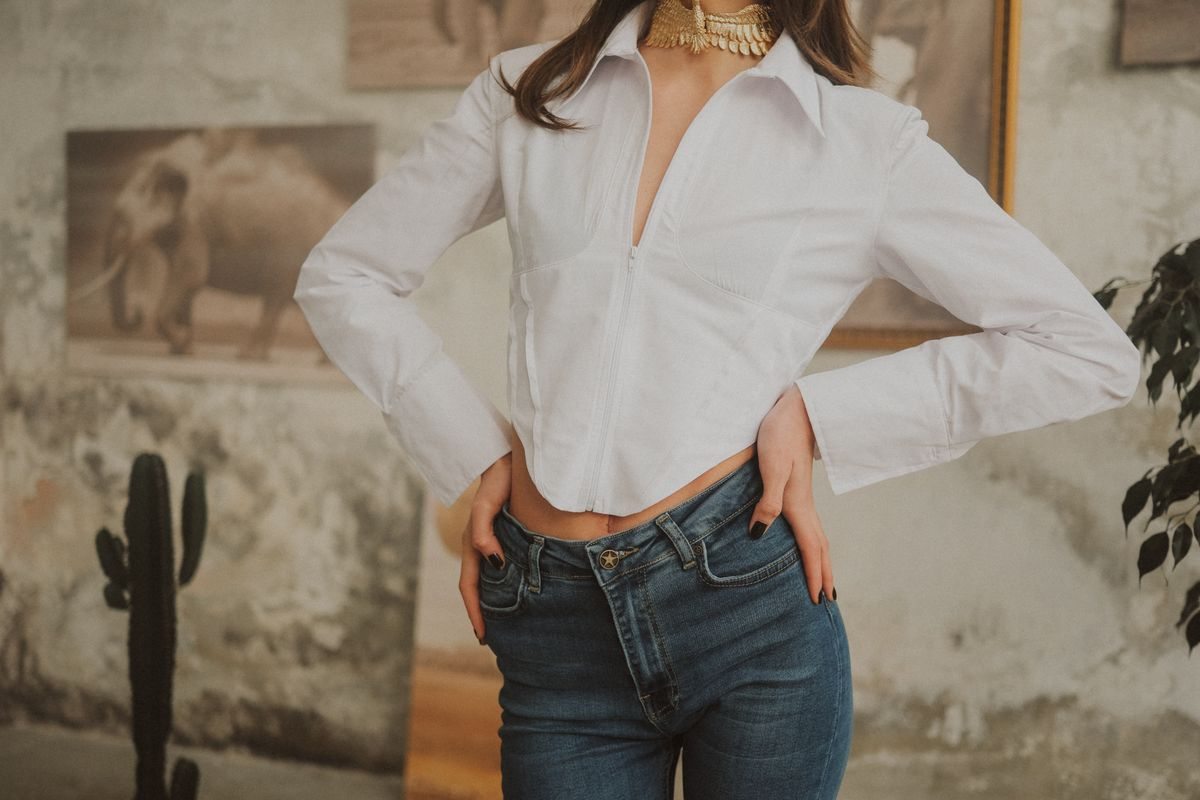
Fasten the shirt as you intend to wear it, then move your arms before adding the knit. A shirt that already pulls across the back will not become more comfortable under another garment. Smooth the shoulder seams and check that the sleeves are not twisted.
The fabric matters. A crisp shirt holds its shape but can create folds beneath a close knit. A softer shirt may sit more smoothly, though its collar can collapse differently. Neither is the automatic answer. Try the actual combination rather than assuming that a thin shirt will always disappear beneath a jumper.
Leave room through the upper arm
The most obvious layering problem is often at the collar, but the least comfortable one may be inside the sleeve. A fitted knit over a full shirt sleeve can restrict the elbow and create bunching near the armpit. A roomier jumper or a shirt with a simpler sleeve can resolve it.
Reach forward as though using a keyboard or picking something from a shelf. If the layers pull against each other, adjust the fit rather than spending the day repeatedly straightening them. A knitted vest is another option when you want the collar and body of the shirt visible without two complete sets of sleeves.
Decide what the collar should do
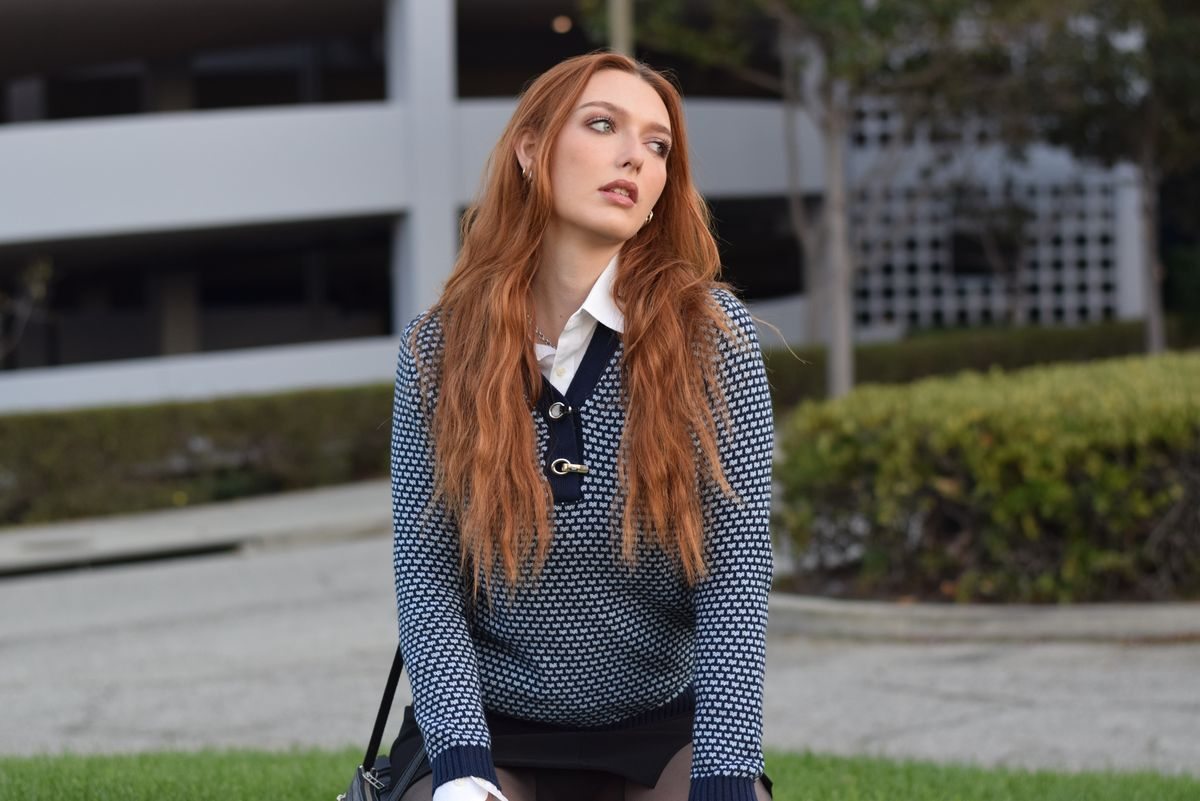
A pointed collar can sit outside a crew neck or remain partly within a wider neckline. A high knit may hide most of it. Set the collar once, then turn your head and move normally. If it constantly folds under, the necklines may be competing.
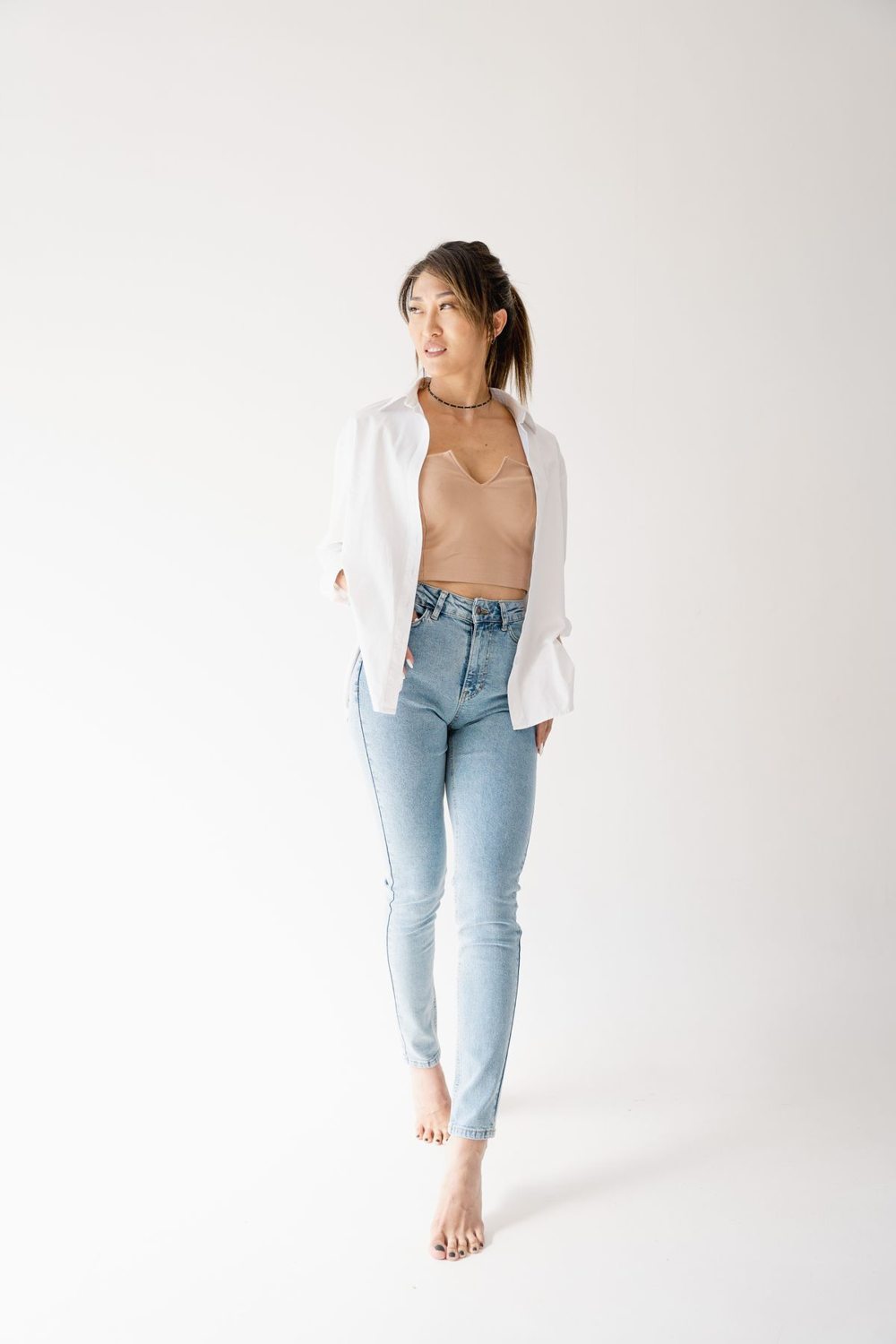
You do not have to expose both collar points perfectly. An open-neck shirt under a V-neck knit can look more relaxed, while a buttoned collar creates a clearer shape. Choose what feels comfortable at the throat, especially if a scarf or coat will be added for the journey.
Handle cuffs and hems separately
A little cuff beyond the knit can make the layering visible. Too much cuff may get in the way, and repeatedly pushing it back can stretch or bunch the outer sleeve. Try folding the shirt cuff only if it remains comfortable inside the knit.
At the waist, decide whether the shirt is tucked, loose or partly visible below the jumper. A thick shirt tail inside a firm waistband can create a ridge. An untucked hem may be easier, but check its length from the back as well as the front. The layered look should not depend on a rear view you have not considered.
Add the coat last
The shirt and knit may work together but become crowded beneath a close coat. Test the complete stack before leaving. Pay attention to the shoulder and elbow again, since the third layer reduces the remaining room.
When the combination is right, you should be able to sit and move without feeling the garments tugging in opposite directions. The visible collar is a useful detail, but it is not worth keeping a pairing that never lets your arms relax.