Put the sandals on first
The height of a shoe changes where trousers meet the ground. Flat sandals can reveal a length problem that was hidden by a thicker sole or heel. Put on the pair you actually intend to use, fasten it properly and stand with your weight distributed normally. Then look at both the front and the back of the hem.
The back deserves particular attention. It can slip under the heel while the front still looks clear. Wide legs are especially worth checking because the fabric moves around the foot. Take several normal steps and turn a corner rather than judging the length only from a still photograph.
Decide what should remain visible
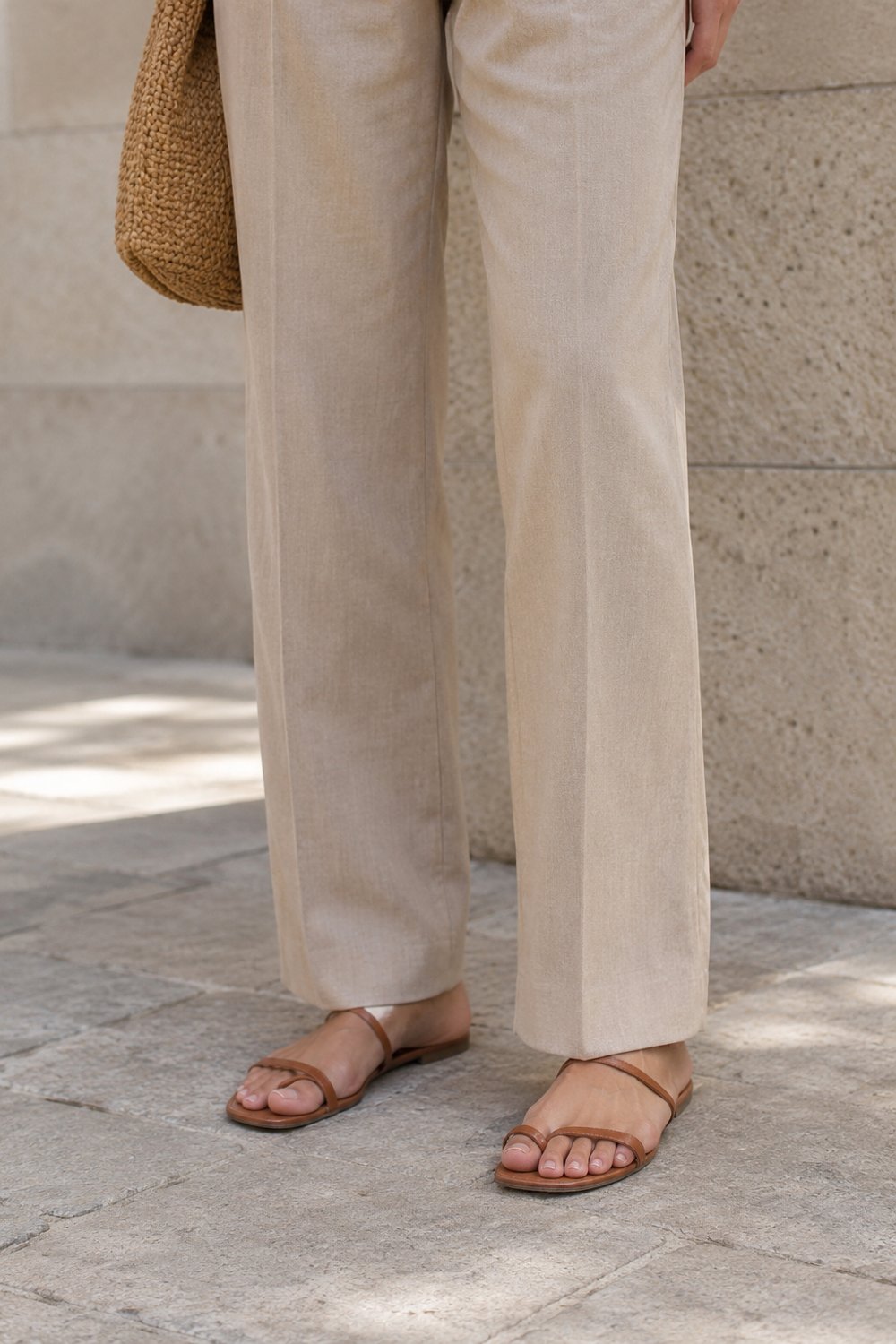
Some trousers are intended to finish above the ankle; others cover part of the foot. With a sandal, the straps and toes become part of that relationship. A cropped straight leg can show the whole sandal, while a longer wide leg may reveal it mainly in motion.
There is no single correct amount of shoe to display. The important limit is that the fabric should not get trapped beneath the foot or drag along the route. Within that limit, choose the appearance you enjoy. A tiny difference in length can be visible without needing to serve a rule about making legs look longer.
Consider the width and weight of the leg
A narrow hem may stay above the sandal's upper, while a wide one can fall around it. Soft fabric may collapse towards the ground; a firmer fabric can hold its edge more clearly. The same measured length can therefore behave differently in two pairs of trousers.
Try the trousers after they have been worn for a short time. Waistbands and fabric can settle, changing the apparent length slightly. Make sure the waistband is sitting where you normally wear it. Pulling the trousers unusually high to make the hem clear is not a reliable solution unless that is genuinely how they fit comfortably.
Use temporary adjustments to learn
A cuff can help you explore a shorter length, but it is not equivalent to a finished alteration. It adds thickness and weight, and a soft fabric may not hold it. If the fold keeps dropping, do not rely on it for a day out. Avoid makeshift fixes that could damage a delicate fabric or create an uncomfortable hard edge.
For a permanent change, consult an alteration professional who can assess the construction. Bring the sandals or explain their sole height, and discuss whether the trousers also need to work with other shoes. A hem chosen for one very low pair may look different beside a more substantial trainer.
Think about the actual ground
A trouser that barely clears a smooth indoor floor may still catch on steps or brush uneven paving. Rain adds another reason to leave sensible clearance. Choose the length for the route, not only the room where you are trying it on.
The sandals themselves should fit securely and suit the amount of walking. A flat sole does not guarantee comfort or grip. If the shoe slips or the straps irritate, changing the trouser length will not solve the main problem. Settle the footwear first, then refine the hem around it.
Keep the upper half uncomplicated while testing
When judging a small length difference, use a familiar top so that you are not changing several variables at once. Once the hem works, add the jacket or bag. You may find the outfit needs little else because the trousers and sandals already provide the shape you wanted.
A good length lets you walk without thinking about the fabric near your feet. That is a more useful test than whether the trousers reproduce a photograph exactly, especially when that photograph may have been taken with different shoes, on different ground and without any walking at all.