Separate size from intention
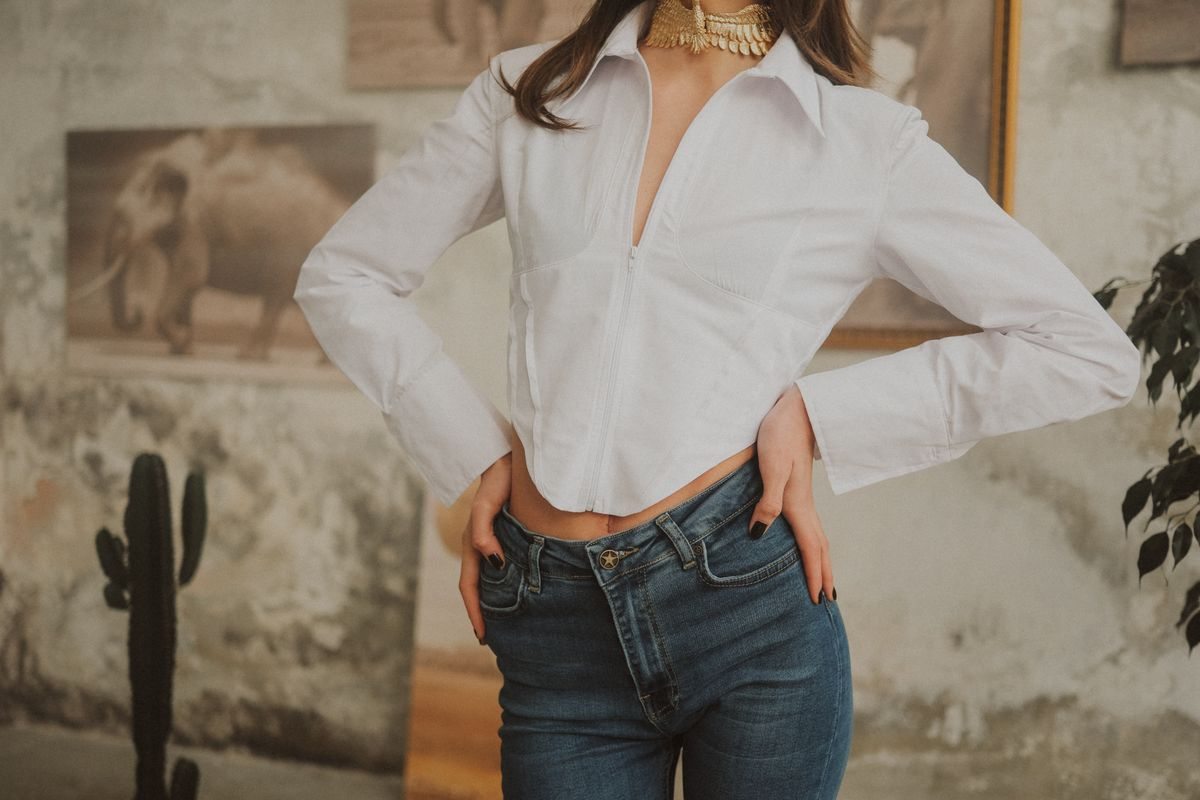
A shirt can be designed with extra width, a dropped shoulder and a longer hem, or it can simply be a larger size of a close-fitting shape. Those versions may behave differently. Look at the collar, cuff and shoulder as well as the body before deciding how to wear it.
The shirt should allow movement without making every detail cumbersome. A cuff that covers the hand can be turned back if it stays comfortably in place. A collar that slips around the neck may be harder to manage. Extra room is useful only when the garment still works for your day.
Wear it as the main top
Loose over trousers, an oversized shirt creates a long upper shape. The lower half can be narrow or roomy; the important question is whether you like the combined outline. Try both before assuming loose clothing must always be paired with something fitted.
If the shirt hides more of the waist than you want, use a small front tuck or choose a shorter version. A partial tuck should not pull the placket diagonally or create a tight pocket of fabric. Sit down and let the shirt settle naturally before judging it.
With shorts, check that the hem does not conceal them completely unless that is the appearance you intend. Look from several angles and while walking. A long back hem can make the proportions quite different from the front view.
Use it as an open layer
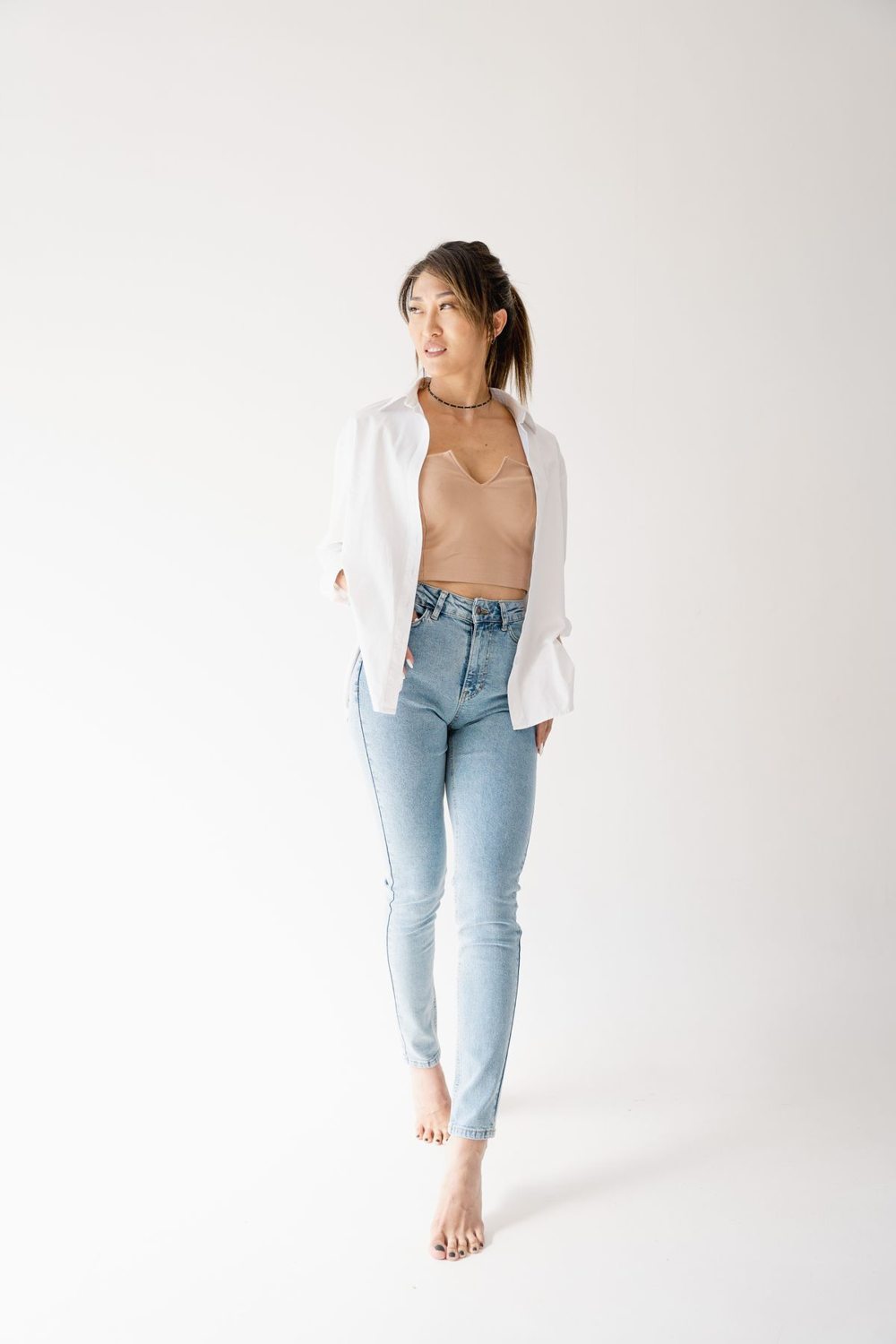
An open shirt over a simple top gives you a lighter alternative to a jacket. The base underneath should be something you are happy to wear if the shirt moves or comes off. Check that the two necklines sit comfortably together rather than repeatedly adjusting them.
The open front creates two vertical areas of fabric. That can be useful over wide trousers or a dress, but it also means the shirt may swing as you walk. Consider the wind and the tasks of the day. A loose layer can be pleasant until you need to keep it away from equipment, food or other things you are handling.
Avoid solving every fold
An oversized shirt is likely to crease and shift. Trying to hold every part in a perfect position defeats the ease that made it appealing. Choose one intervention, such as a cuff turn or a tuck, and see whether the rest can be left alone.
If the outfit feels untidy, identify the actual cause. The hem might be too long for the trousers, the sleeves might obstruct your hands or the fabric might be too stiff for the shape. A different pairing or an alteration may help more than adding a belt and several accessories.
Once you know the shirt's role, keep a record of the combination. A garment with several possible uses can feel confusing in the morning; remembering one reliable way to wear it makes the extra volume an option rather than a problem.