Put on the shoe before judging the length
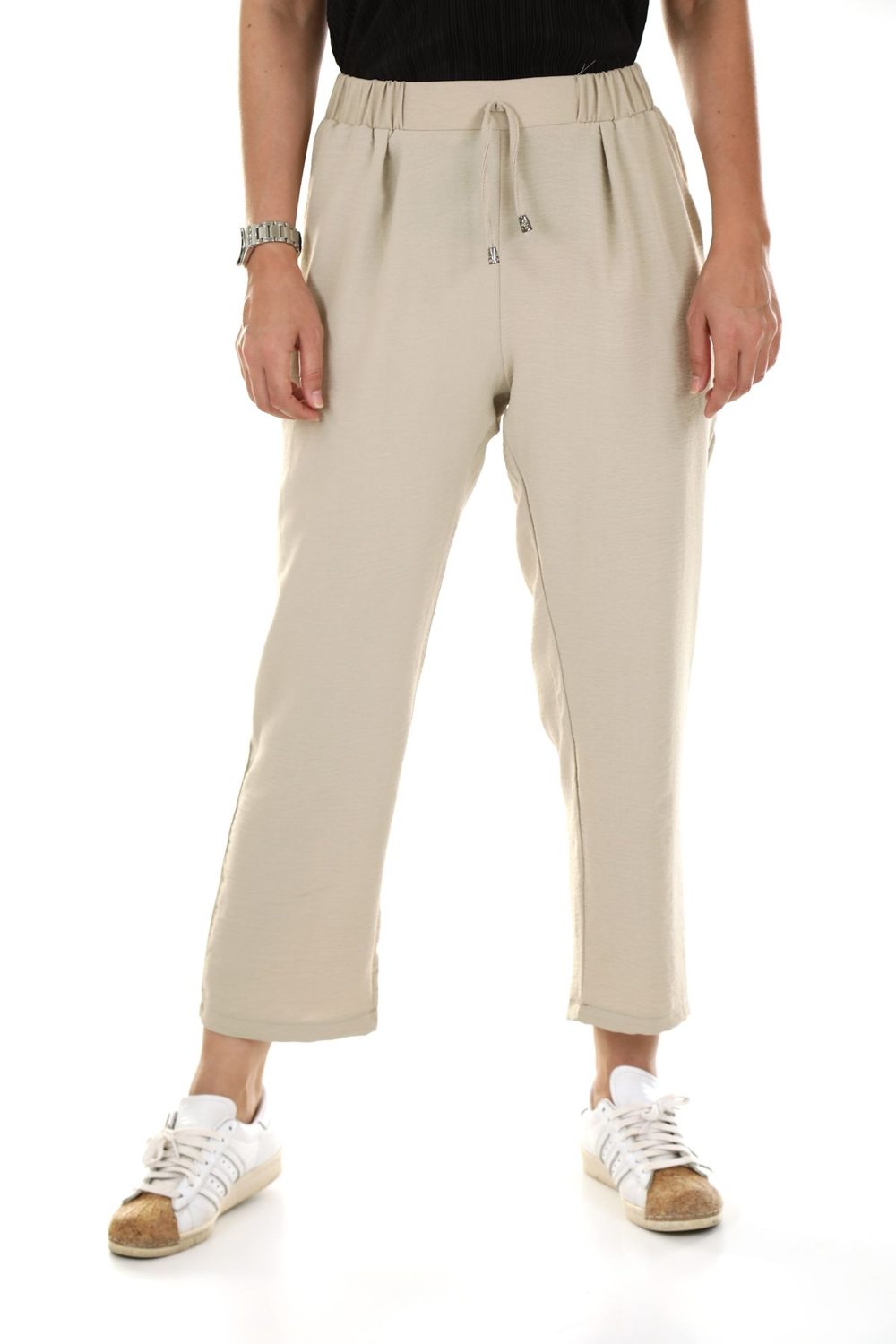
Cropped trousers are defined partly by what they leave visible. That space can be a bare ankle, a sock or the top of a boot. It changes with the shoe, so start with the footwear you intend to use rather than looking at the trousers alone. Two pairs called ankle length can finish in different places on the same person.
Stand normally rather than stretching one leg forward into a photograph pose. Then take a few steps and sit down. The hem rises while seated, and a sock that is hidden standing may become prominent at a table. Decide whether you like that version too. There is no reason the outfit must look identical in every position, but the changes should feel comfortable to you.
A low shoe leaves an open interval
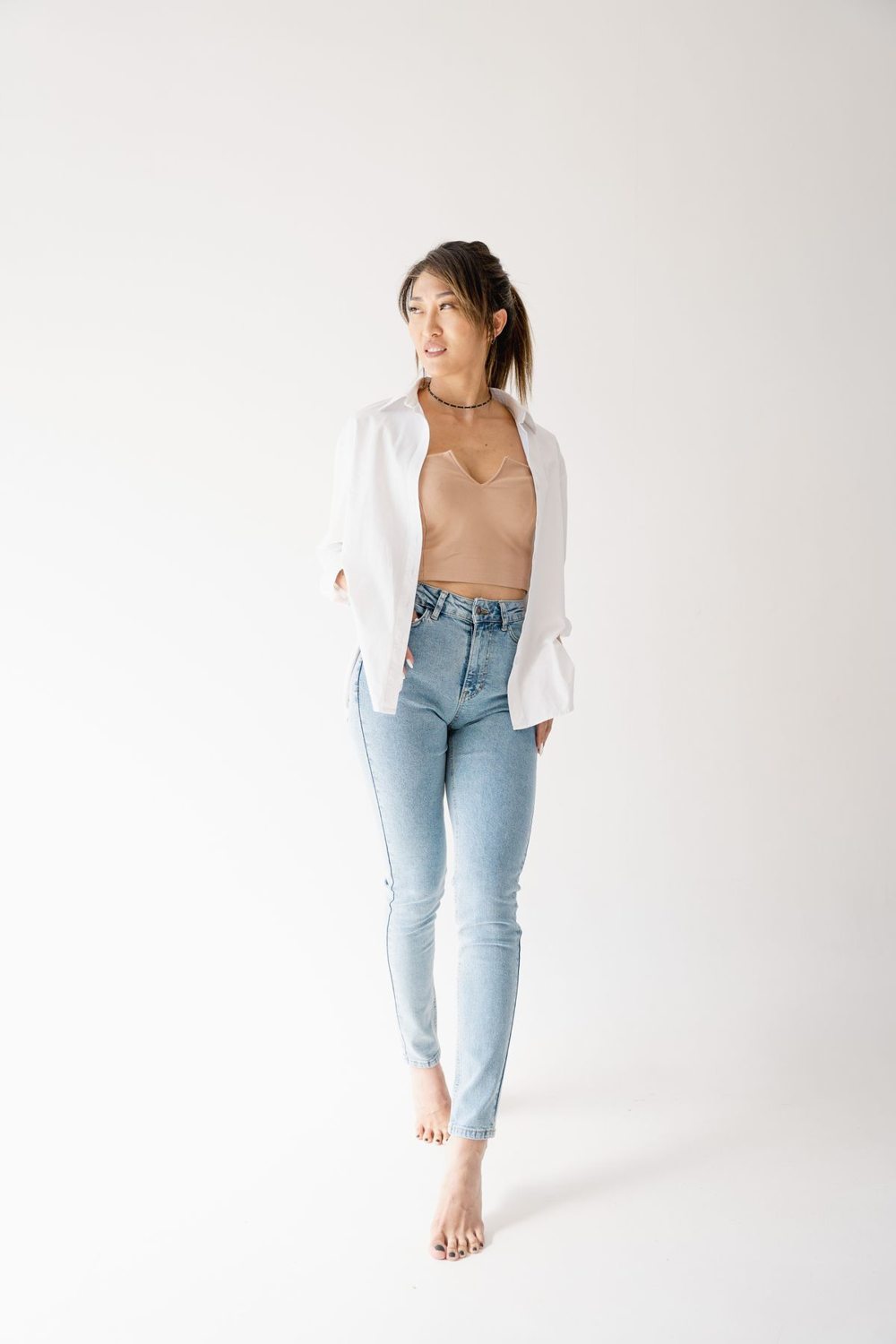
Loafers, low trainers and some sandals expose more of the ankle. The shape of that opening depends on the upper as well as the sole. A high-front loafer covers more than a low-cut flat, even when both have the same heel height. Compare the actual shoes rather than treating all flats as interchangeable.
If the gap feels abrupt, you can try a slightly longer trouser, a shoe that covers more of the foot or a visible sock. If you enjoy the separation, keep it. The purpose is not to create the longest possible visual leg line; it is to choose a relationship between clothes that you want to wear.
A boot can meet or overlap the hem
A slim boot shaft may disappear beneath a cropped trouser, leaving little or no skin visible. A wider shaft may catch against the inside of the hem. Walk and turn to see whether the fabric falls back into place or stays caught. The still view can look convincing while the moving version becomes irritating.
A deliberate gap above the boot is another option. Check it from the side, where the opening may look different. If you want an overlap, make sure it remains an overlap while sitting rather than revealing a narrow accidental strip. A different sock can help with coverage, but it cannot stop two incompatible shapes from catching against each other.
Let socks be visible on purpose
A sock does not have to imitate bare skin or disappear. A colour related to the trousers gives a quieter transition, while a contrasting one becomes a detail. Think about the thickness too: a bulky sock changes how a shoe fits, and comfort should decide whether the combination stays.
Try the outfit with the socks you will actually wear that day. It is easy to approve a trouser length barefoot at home and then dislike the band of colour that appears later. Keeping two known sock-and-shoe combinations can make cropped trousers much easier to use in cooler weather.
Test any temporary length change
A cuff can shorten trousers without committing to an alteration, but it also adds weight and a visible band at the ankle. On a stiff fabric that may be appealing; on a soft one the turn may collapse. Do not judge the effect only while holding the cuff in place with your hand.
If you repeatedly prefer the same length, ask an alteration professional what is possible with the garment. A taper, lining, zip or decorative hem can complicate the work. Bring or wear the shoe that informed the decision, and explain whether you want the hem to meet it or leave a gap.
Check the whole silhouette once
After the hem is settled, step back and look at the upper half. A long shirt, cropped jacket or full knit each changes the overall proportions. You may find that the ankle gap was never the main issue; it was simply the detail closest to your attention. Change one thing at a time, then stop when the outfit feels usable rather than pursuing an abstract perfect length.