Let the watch sit properly
Fasten the watch at a comfortable position before adding bracelets. Its fit should not depend on another piece holding it in place. If the strap or bracelet needs adjustment, deal with that first; surrounding an awkward fit with jewellery will not make it easier to wear.
Look at the case size and strap texture. A large polished case creates a different emphasis from a small face on a soft leather strap. Your other jewellery can repeat a detail, introduce a contrast or simply remain quiet beside it.
Decide whether to share the wrist
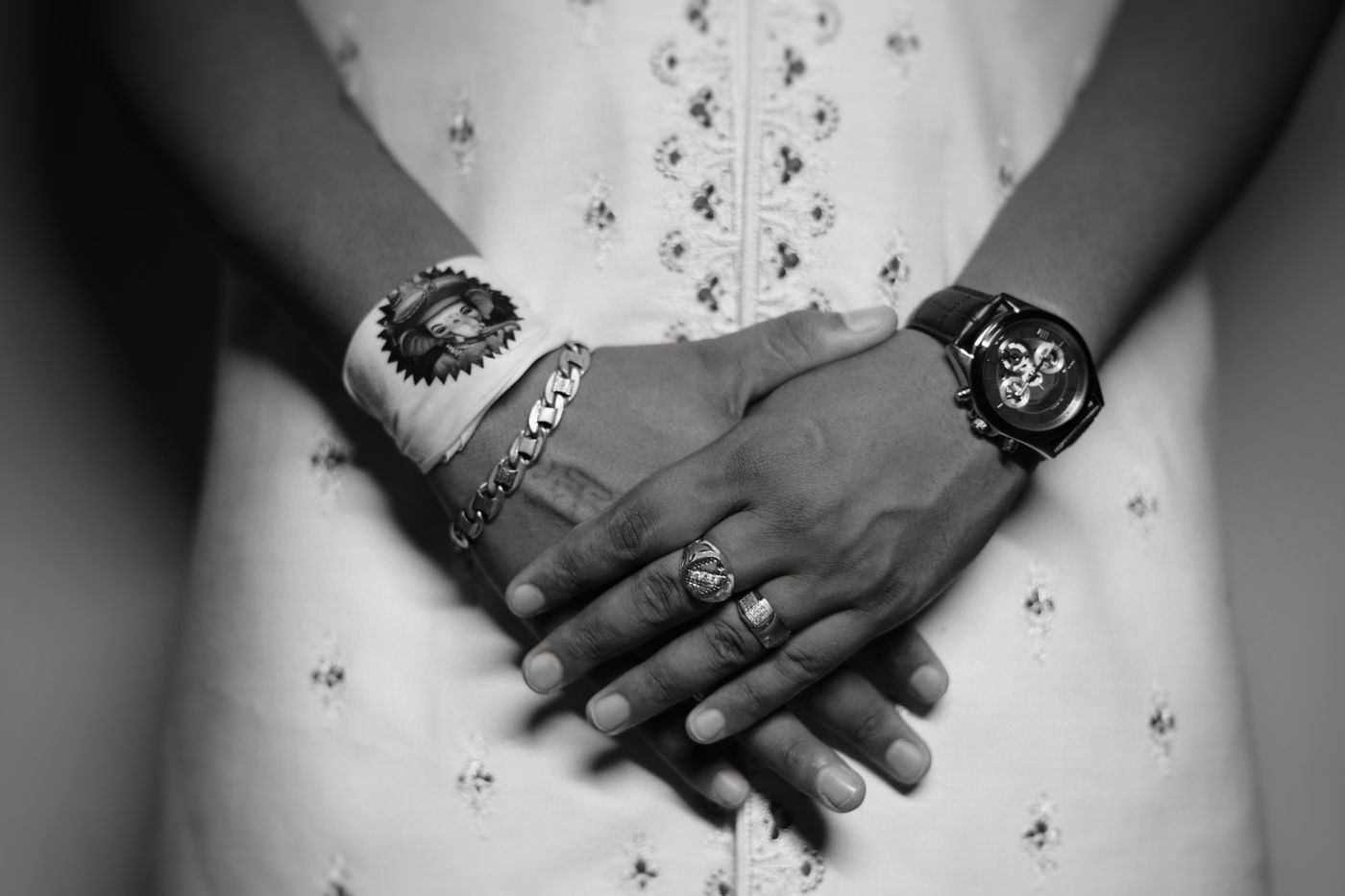
Wearing bracelets on the opposite wrist is an easy way to give both pieces room. If you prefer them together, try one bracelet first and move your arm normally. Notice whether it slides over the watch face, presses into the strap or makes repeated contact with the case.
Different materials can scratch or mark one another. Follow the care guidance for the pieces you own and separate them if the combination seems likely to cause damage. The appearance of a stack is not a reason to ignore how its surfaces meet.
Connect through more than metal colour
A watch does not require every ring and earring to use the same metal colour. Repeating a rounded shape, a dark detail or a restrained scale can create a relationship too. Check the arrangement with your clothes rather than judging it solely from a close-up of your wrist.
For a watch with a colourful strap, consider whether you want the colour to stand out. A quiet ring or earring can leave it as the main detail. Alternatively, a small echo elsewhere in the outfit can connect it without making everything match.
Keep access easy
You should be able to read and operate the watch without moving a pile of jewellery aside. Sleeves, bag straps and desk work all affect that. If the arrangement needs constant correction, simplify it. A watch can be the only piece at the wrist and still be part of a considered jewellery choice.