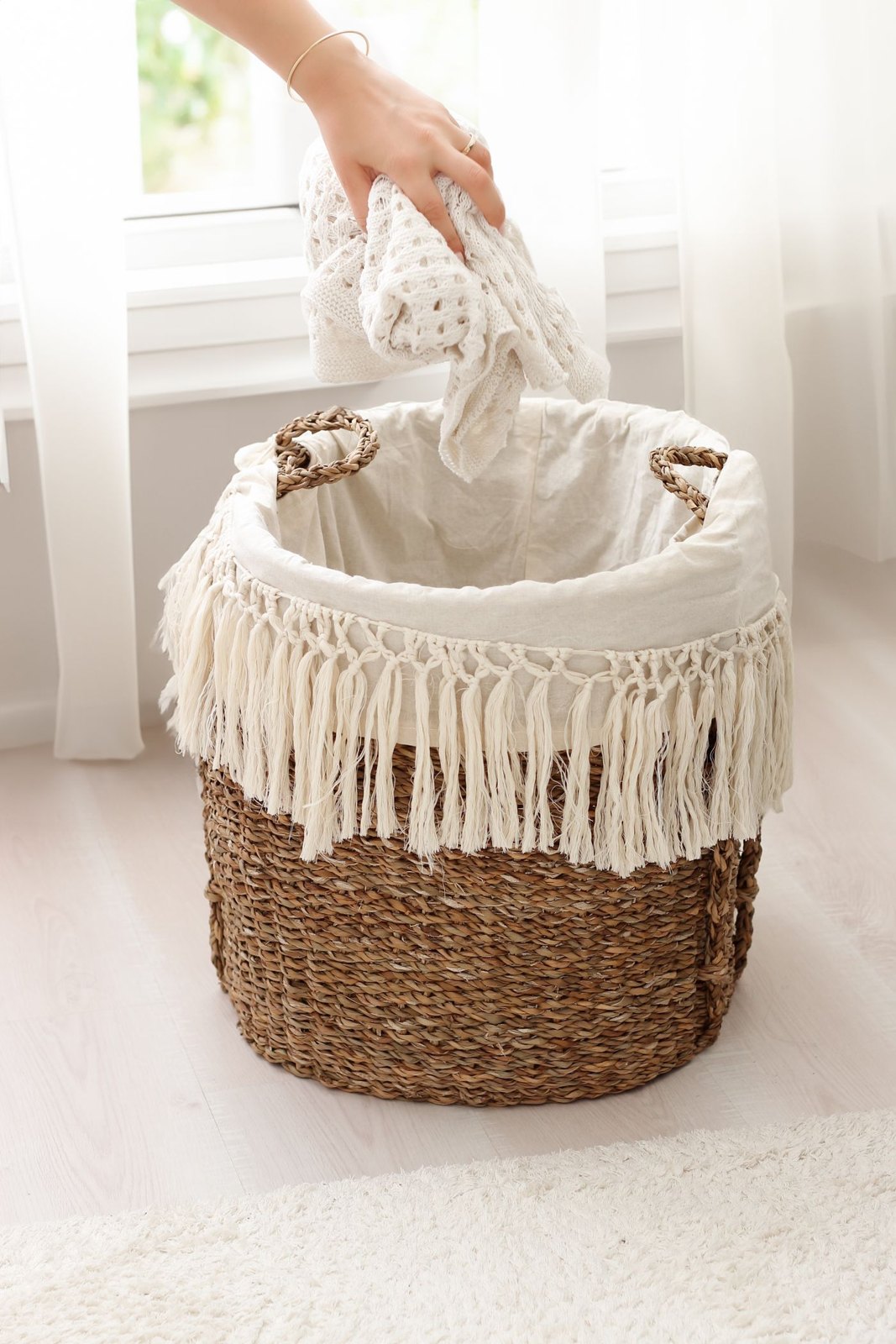
Start with incompatible instructions
Empty the basket somewhere you can see the garments without mixing them with clean clothes. Before making colour piles, set aside anything whose care instructions differ from your normal machine wash. A piece requiring professional care does not become suitable for home washing because it is the same shade as the rest of the load.
Read the labels on unfamiliar items. GINETEX's guidance distinguishes the permitted treatment for individual garments; matching colours alone does not establish that two pieces can share a process. Keep a small separate basket or bag for clothes that need a different decision, so they do not accidentally fall back into the ordinary pile.
Look at the condition of each item as you sort. A stain, loose button or open seam deserves attention before the garment disappears into a drum. Remove objects from pockets and check for tissues, receipts and small items. This is also a chance to notice that something does not need washing yet, rather than treating the basket as an unquestionable instruction.
Build a load that makes sense together
Once care requirements are compatible, consider colour, fabric weight and surface details. A lightweight top with delicate trim may need different handling from a heavy garment with exposed hardware. Follow the garment and machine instructions about protection, fastening and loading rather than assuming a mesh bag makes any combination suitable.
A new strongly coloured piece is a reason to check the manufacturer's advice, especially if you have not seen how it behaves. Do not use a general rule about dark or pale clothes as a substitute for the specific label. If there is uncertainty, keep the item separate until you have reliable instructions.
Avoid cramming the machine because the basket is nearly empty. Check the machine's guidance for the selected programme, since capacity can differ between programmes. A full cotton load and a smaller delicate load are not necessarily interchangeable settings. Leave the machine to operate as its manufacturer intends rather than judging capacity only by whether the door closes.
Plan what happens afterwards
Sorting is unfinished until you know how the clothes will dry. Put items with special drying requirements somewhere you will notice them when unloading. A small written reminder near the basket can be more dependable than remembering which dark top cannot join the others in the dryer.
If several garments need flat drying and you only have room for one, split the task across days. That is more useful than washing everything at once and leaving wet items piled up while waiting for space. Keep the next day's clothing needs in mind, but do not shorten a required drying process simply because you need the item quickly.
Handle the one-item exception
Suppose nearly everything in the basket can follow your normal routine, but one unfamiliar top has joined the pile. Do not change the whole load by guessing at a compromise programme. Remove that item and read its instructions separately. If it can safely join a later compatible load, keep it with that group. If it requires another process, give it a clear place rather than leaving it on top of the machine where it may be swept into the next wash.
A household with several people can use the same idea without creating a rule for every garment. Agree that uncertain items go into one marked location for checking. The person who knows the garment can then explain the exception. This is more reliable than expecting everyone to recognise which of several similar dark tops has different care requirements.
Review any long-standing separate pile occasionally. If an item waits for months because its care is inconvenient, decide whether to arrange the required cleaning, use it differently or reconsider whether it belongs in your rotation. Sorting should lead to a next action, not create a protected place where clothes disappear from use.
Make the system easy to repeat
A complicated set of permanent bins can take more room than it saves. Start with the distinctions you regularly need: ordinary washing, separate-care pieces and anything awaiting attention. Add another category only when it solves a recurring mix-up.
Keep the sorting decisions visible to anyone who shares the laundry. A label such as “check before washing” is clearer than a basket whose meaning exists only in your memory. When an unusual item has been handled, put it away and clear the temporary pile. The routine should help clothes return to use, not create a series of holding areas that slowly fill the room.