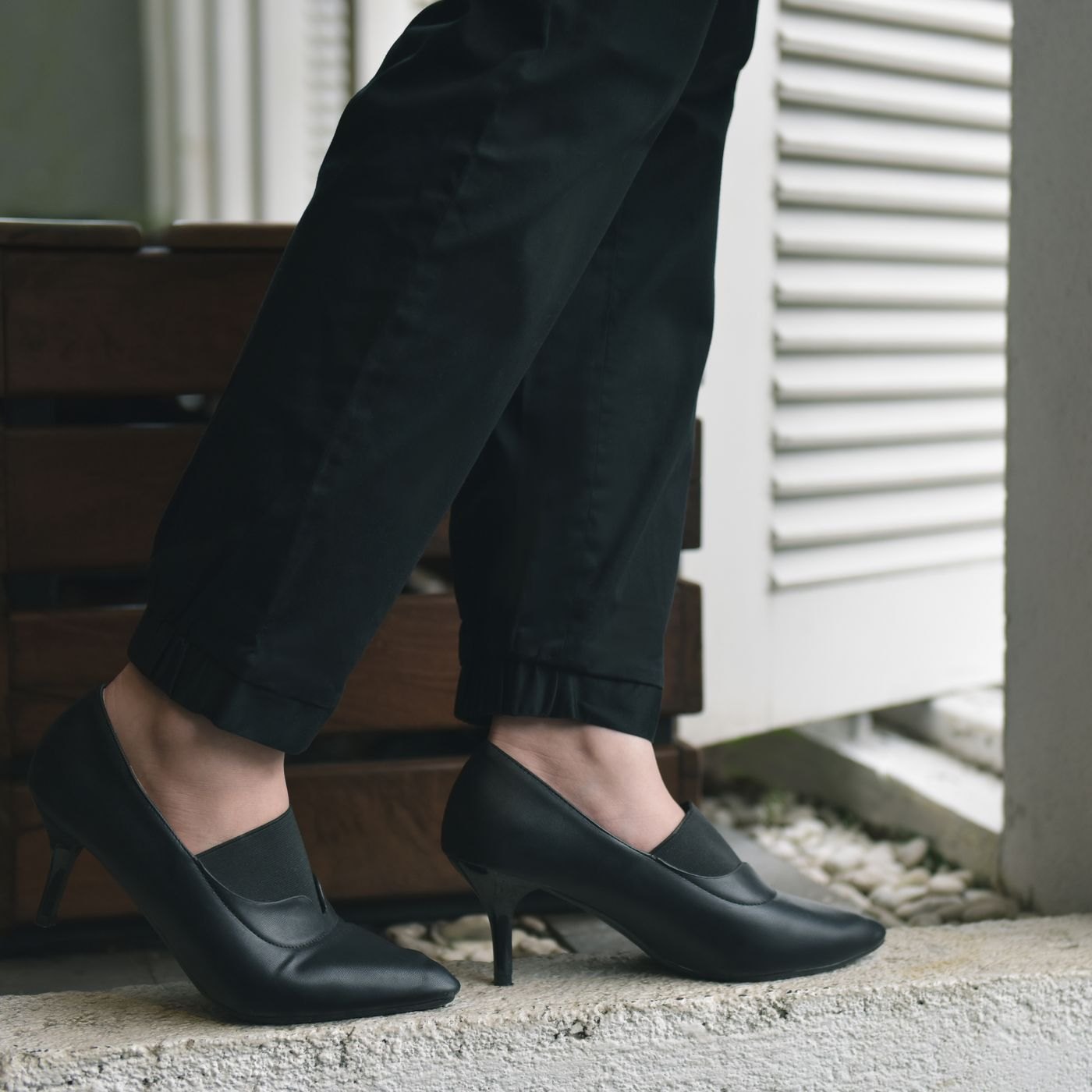
Put the shoes on first
A trouser hem is not a number that works independently of the outfit. The shoe's height and shape affect where the fabric falls and how much of the foot remains visible. Bring the pair you expect to wear most often when checking a new length. If you alternate between very different shoes, decide which pairing matters most rather than expecting one hem to behave identically with both.
Stand naturally with the waistband where you actually wear it. Pulling trousers higher for the fitting can produce a different length once you relax. Fasten them and let the fabric settle before judging the bottom edge. Check the back as well as the front; a hem can look neat over the toe while touching the floor behind the heel.
Choose the effect you want
A small break above the shoe gives a different impression from a hem that hangs straight or ends above the ankle. None is compulsory. Look at the width of the leg and the weight of the cloth. Wider, fluid trousers may move around the shoe, while a narrow leg can catch on it and create folds higher up.
Try a temporary fold or have a professional pin the proposed length. View it from a short distance instead of looking straight down, which changes the perspective. Take a few careful steps as directed and check whether the fabric catches under your heel. A style you enjoy standing still should also work along a pavement.
Account for the existing finish
A plain hem, turn-up and original denim finish involve different decisions. Ask an alterations professional what the chosen change would look like before cutting. If the trousers are new, read the care instructions and discuss whether any permitted cleaning should happen before the alteration. Do not assume every fabric will change in the wash or that extra length will compensate predictably.
Once altered, try them again with the same shoes. If another pair produces a very different result, treat it as a separate styling decision. You might reserve these trousers for one shoe height or choose a more forgiving length on the next pair. The aim is a hem that works in your real rotation, not a universal rule measured from the floor.