Write the trip as days
Begin with the actual sequence: travel, walking, meals, work or any planned event. Include the parts that are easy to overlook, such as a long wait, a cool evening or a day when you will carry your own bag. A wardrobe based only on the destination's most appealing photograph can leave you without clothes for most of the trip.
Check current weather information and any venue requirements close to departure. Keep uncertainty separate from the confirmed plan. One adaptable layer may cover a range of conditions; three complete emergency outfits may simply make the bag heavier. Choose the level of backup that fits the trip rather than a fixed packing formula.
Build the main outfit first
Pick a comfortable outfit for the activity that occupies the most time. For a walking trip, start with shoes you already know you can wear for that kind of day, then choose the trousers or skirt that works with them. For work travel, begin with the clothes needed for the appointments. Use the remaining pieces to connect those outfits rather than starting a new wardrobe for each day.
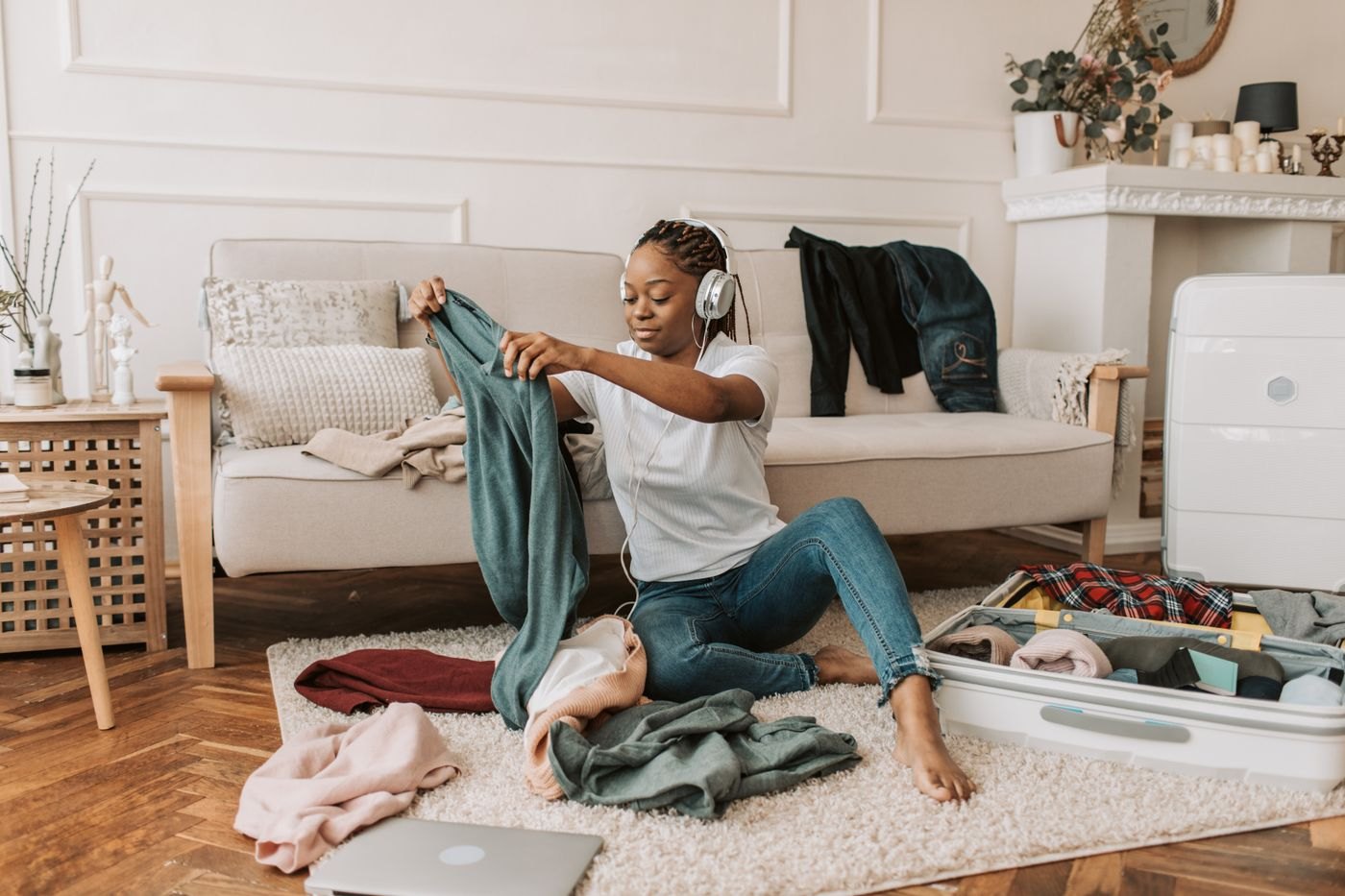
Lay everything out and make the combinations physically. A top that appears to match two bottoms may sit awkwardly with one waistband. A jacket may fit over a T-shirt but not the knit intended for a cold evening. Try the uncertain pairings before packing, when an alternative is still easy to reach.
Count repeats realistically
Repeating a jacket or trousers can reduce the load, but consider the conditions and care needs. A garment exposed to heat, spills or strenuous activity may not be ready for another day simply because the spreadsheet says it is. Pack enough changes for your comfort and the actual washing opportunities.
If you plan to do laundry, verify access and timing. A machine, a sink and a professional service are different arrangements. Check the garments' instructions and allow drying time; do not make the final clean outfit depend on a wash that happens the night before departure. Keep one workable option available while another is being cleaned.
Give special pieces a specific reason
An occasion outfit earns space when there is an occasion. Try it with its shoes and accessories before deciding how to pack it. Check whether it needs a particular hanger, careful folding or finishing at the destination. Do not assume that equipment will be supplied unless you have confirmed it.
Limit accessories by looking at what changes an outfit usefully. A different pair of earrings can take little space, while a second large bag may not add much if it serves the same role as the first. Use your actual habits as evidence. If you rarely change bags at home, a busy trip is unlikely to create more time for it.
Test one ordinary day on paper
Take a day that includes sightseeing, a meal and the journey back to where you are staying. Name the shoes first, then the clothes and outer layer. Ask what you would carry when the layer comes off and whether the bag still has room for the things you need. If the outfit requires returning to the accommodation halfway through the day, check that the itinerary actually allows it.
Now change one condition: the afternoon becomes cooler or you decide to walk further. See whether the same clothes can adapt with the layer already packed. You do not need to plan for every possible event, but this simple test exposes combinations that work only under one ideal set of circumstances.
Repeat the exercise for the most formal or specialised day, if there is one. Keep that outfit's requirements distinct instead of allowing them to multiply through the whole suitcase. A particular shoe for an event may be worth packing even if it is worn once; several speculative alternatives are a different matter.
When two garments do the same job, choose based on comfort, care and how well you know them. A new item can be appealing, but a trip with limited alternatives may not be the best place to discover that its waistband or fastening bothers you. Wear it at home first if time allows.
Rehearse the bag as well as the clothes
Close the luggage and carry it through the sort of movement the journey includes. Make sure you can reach travel documents, a layer and other immediate needs without unpacking the main compartment. Follow the carrier's current baggage rules rather than relying on remembered dimensions.
After returning, note what you wore and what stayed packed. A short record from your own trip is more useful for the next one than a universal list. Remove the unnecessary backup next time, while keeping the item that quietly made several days easier.