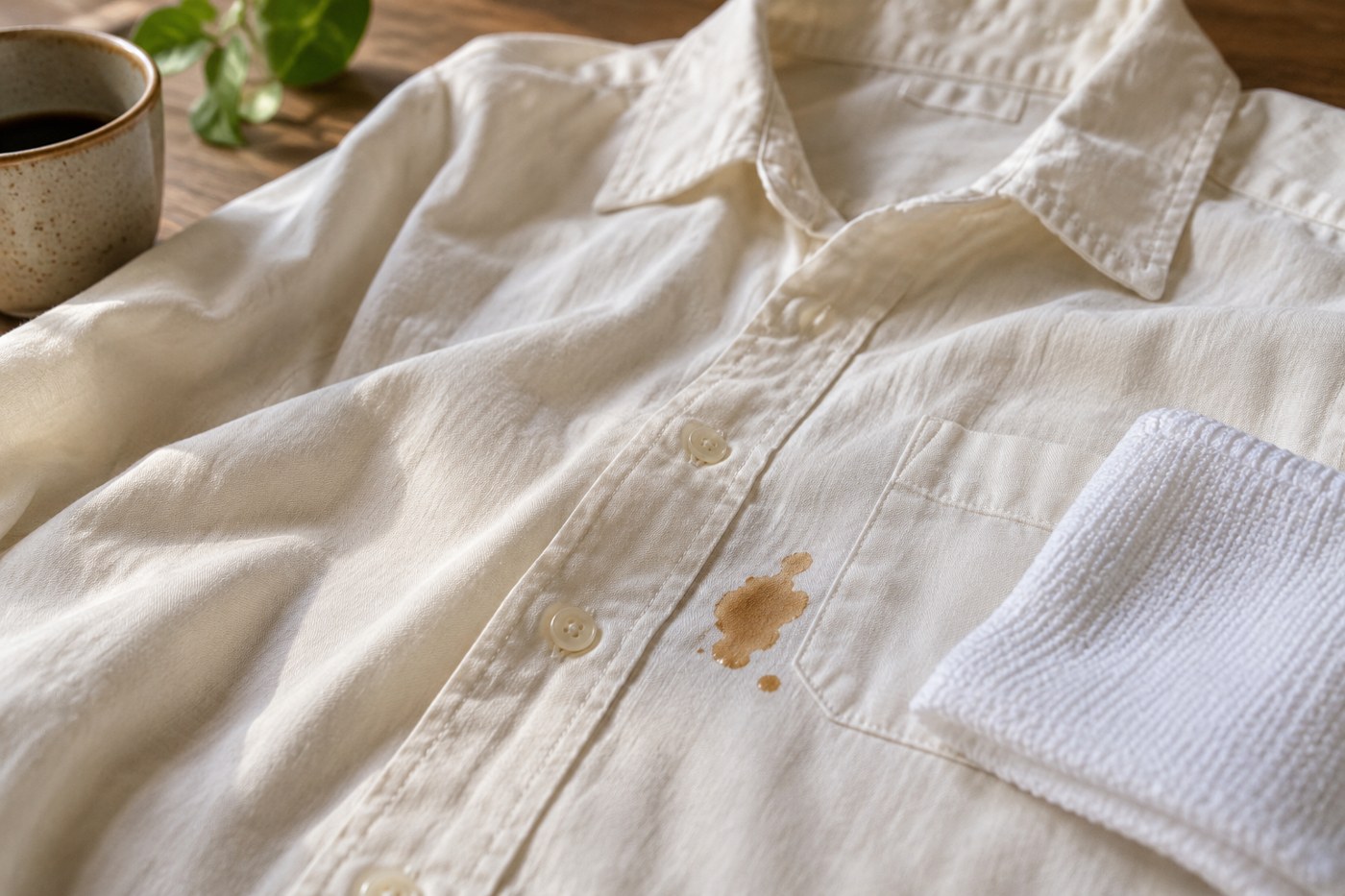
Slow down the first reaction
A visible stain invites an immediate experiment: rubbing with whatever cloth is nearby, adding soap or reaching for heat. Before doing any of those things, identify what was spilled and read the garment's care instructions. The treatment for one substance on one fabric is not a reliable answer for everything else.
Where appropriate, gently lift loose material without spreading it and use a clean absorbent cloth for excess liquid. Avoid vigorous rubbing. If the fabric is delicate, the colour is unstable or the care instructions are uncertain, stop and seek advice rather than turning a small mark into a larger area of damage.
Keep useful information. Note what caused the mark, when it happened and anything already applied. A professional cleaner can make a better assessment with that history than with a garment described only as stained. Do not conceal an attempted treatment because it did not work; that detail can affect the next step.
Choose guidance for the actual combination
Look for instructions from the garment manufacturer or a relevant textile-care source. Woolmark, for example, separates stain guidance by substance for wool rather than offering a single remedy for all marks. That structure matters: a universal household recipe ignores differences in both stain and material.
Read a stain-removal product's label in full, including fabric restrictions and testing instructions. Do not mix cleaning products or layer several treatments in quick succession. More products make it harder to know what has happened and may create a new problem. A product suitable for one washable cotton piece may be unsuitable for its trim or a neighbouring panel.
Keep heat out of the guesswork
Do not move automatically from an unsuccessful treatment to an iron or dryer. Check the relevant care guidance and inspect the mark before finishing the garment. If it remains, ask for the next appropriate step rather than assuming heat will complete the cleaning.
For an item requiring professional care, contact the cleaner promptly and describe the issue. Ask how to keep it until the appointment. Avoid storing a damp garment in a closed bundle while waiting, and do not apply fragrance to cover an odour associated with the spill.
Decide when to stop
If the surface begins to change, colour transfers unexpectedly or the mark spreads, stop the experiment. A repeated attempt is not automatically a more determined version of the same successful method. It may be additional wear on an already affected area.
After any permitted cleaning, check the result in ordinary light once the item is ready to assess. A residual mark might be something a professional can address, something you accept in casual use or a reason to reconsider the garment's role. You do not have to keep escalating treatment until the cloth is damaged. The first useful decision is to understand the problem; the next is to recognise when it needs a different pair of hands.