Decide whether the sock is visible
Look at your outfit while seated as well as standing. Trousers that cover the sock when you are upright can reveal several inches once you cross your legs. If that glimpse bothers you, choose a length that keeps the intended colour visible instead of leaving an unexpected gap of skin.
A sock close to the colour of the shoe creates a quieter connection. One close to the trousers extends their colour downwards. A contrasting sock makes a deliberate break. All three approaches can work; the difference is where you want the eye to pause. You can test them with clothes already on rather than imagining combinations from a drawer.
Let texture contribute
Ribbed cotton, fine wool and a sheer sock each bring a different character to a loafer or trainer. Try the thickness inside the actual shoe. A sock that improves the appearance but makes the shoe tight is not the right choice for that pairing. Equally, a very thin sock may slip around in a shoe fitted with a thicker one.
With wide trousers, only a small part may show as you walk. A strong colour can make that brief interval interesting. With a short skirt and substantial shoes, a longer sock becomes a much larger part of the outfit. The same pair can therefore feel understated in one combination and dominant in another.
Repeat one detail
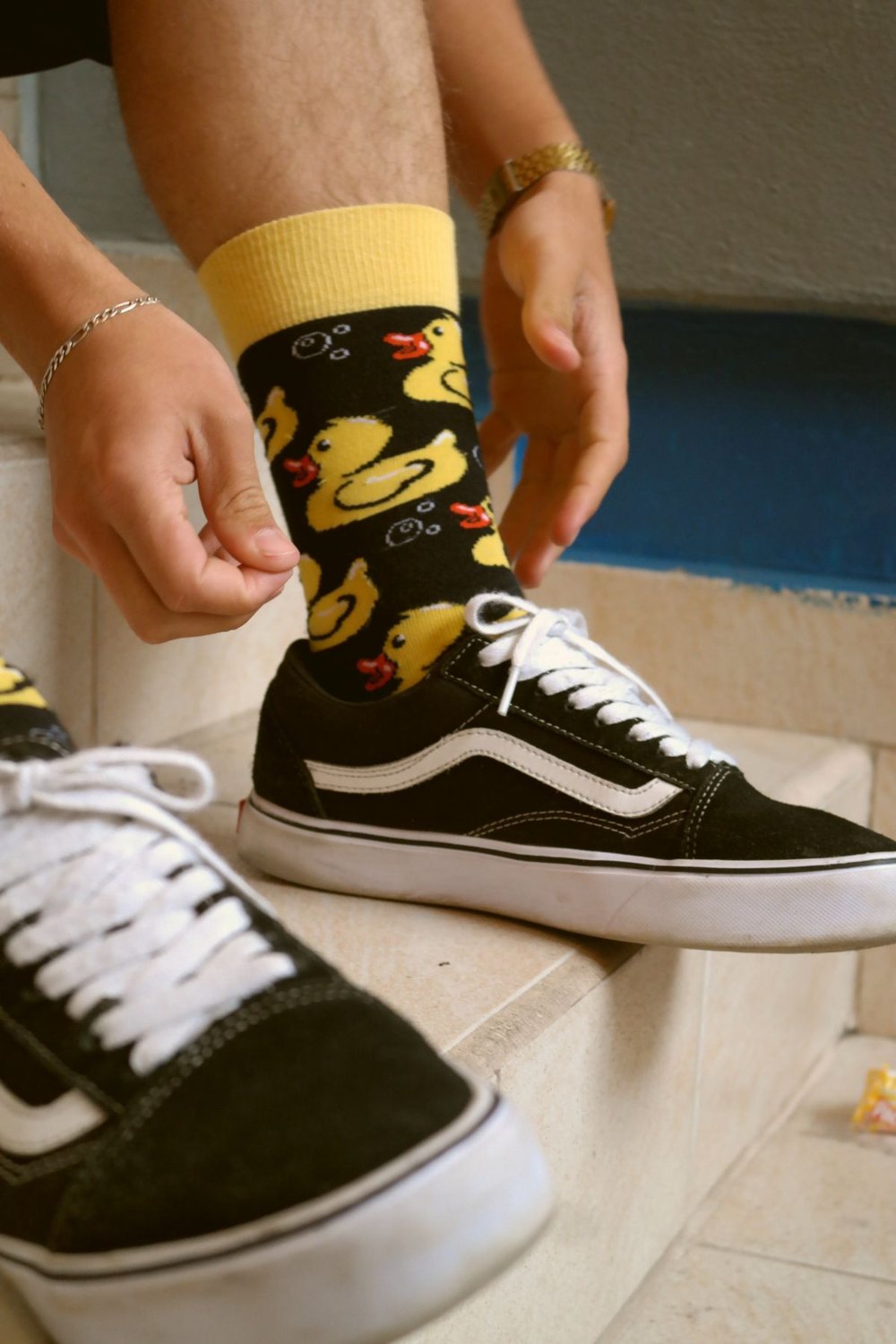
If you want a starting point for colour, borrow a small note from a scarf, shirt stripe or bag. This need not be an exact match. A muted version of the colour can make the connection without turning every accessory into a set. Patterned socks are easier to assess from a normal viewing distance; close-up photographs exaggerate their importance.
Check that the tops stay where you put them without constant adjustment. Keep the pairs that work with particular shoes near one another if that makes getting dressed easier. There is no need to give every outfit a contrasting sock. Sometimes the useful choice is the pair you stop thinking about as soon as you leave home.