Find out what the chart measures
A size chart is a starting point, not a translation of every label in your wardrobe. Open the chart linked to the actual product and check whether it describes body measurements or the finished garment. A body chart asks you to compare your own dimensions. A garment chart describes the item, including whatever room or shaping the designer has built in.
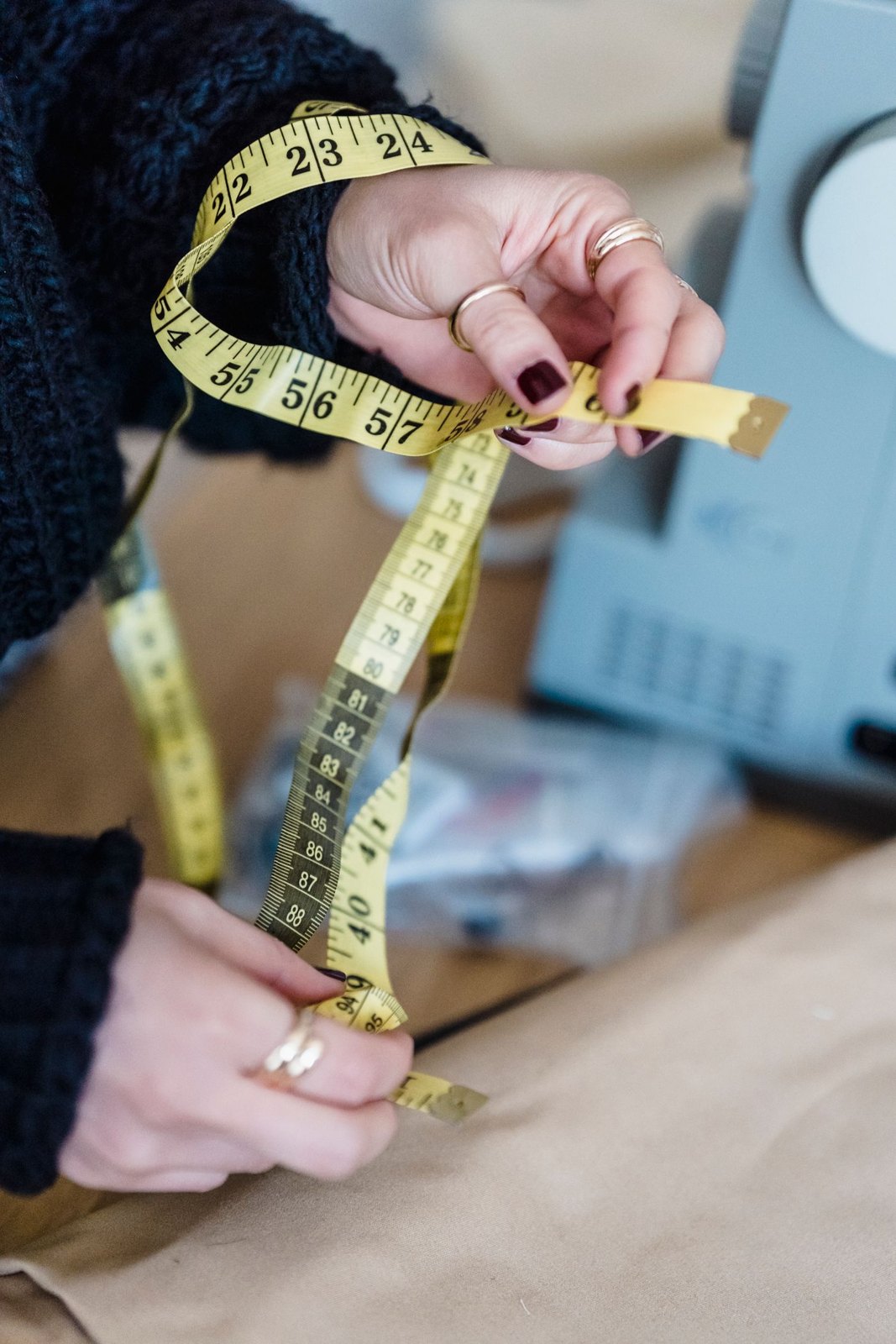
Check the unit before reading further. A flat measurement across a waistband is different from a full circumference, even when the numbers appear plausible. Look for a diagram or written explanation of where the tape begins. If the retailer has separate charts for different ranges, make sure you have the relevant one open.
Read the fit description alongside the numbers
A relaxed shirt and a close-fitting top are supposed to have different amounts of space. Do not use the same target width for both. Fabric matters too: a woven garment and a stretch knit can share measurements while feeling quite different when worn. The listing should tell you about composition and intended fit, though it may not answer every question about how the fabric behaves.
Use a garment you already like as a reference when finished measurements are available. Compare like with like: a similar sleeve construction, rise or cut. For an item intended to sit at a different place on your body, repeating the dimensions of your familiar garment can mislead you.
If you fall between sizes, identify the area that is least negotiable for you. That may be shoulder movement in a jacket, room at the hip in a skirt, or comfort at a trouser waistband. This does not produce a universal instruction to size up or down. It gives you a focused question to ask the retailer.
Work through an in-between example
Suppose a shirt's chart puts one of your measurements in one size and another in the next. First check whether these are body ranges or finished dimensions. Then look at the intended fit and the area where you need movement. If the product is a fitted woven shirt, the part that closes across the body may deserve closer attention than a length you could comfortably wear a little longer. This still does not tell you to select a particular size automatically; it identifies the information you need.
Look for finished measurements or ask the retailer about the relevant area. You might ask for the width across the chest and the shoulder construction in both sizes. If those details are unavailable, acknowledge that the fit remains uncertain. Ordering two sizes can be an option only when the cost, return terms and inconvenience are acceptable to you; it is not a necessary part of shopping.
Consider a different case: a loose dress has plenty of room through the body, but the sleeves are cut narrowly. Choosing solely from the chest measurement could miss the limiting feature. Read the description, inspect the photographs and ask about the sleeve or armhole if that is a recurring concern for you. The chart is one source of information, not a complete model of the garment.
Save the useful result after trying it on. Note the product and size together, because a size that worked in one range is not a promise about every later product from the same brand. A concise personal record helps you recognise patterns while leaving room for a different cut to behave differently.
Keep uncertainty visible
Model height and the size shown can add context, but they cannot reveal the model's measurements or how a garment will fit you. Photographs also vary in pose and styling. Treat them as a view of the garment rather than a precise measuring instrument.
Before ordering, read the current return conditions and consider whether you can try the item properly within the available time. When the chart is incomplete, ask for the missing dimension instead of guessing from an unrelated brand. A clear answer may save a return; an unanswered question may be a good reason to wait.