Start with the actual week
A rail can make getting dressed quicker, but only when it contains fewer decisions than the wardrobe. Before moving anything, look at the coming week. Two office days, a day at home and a meal out call for a different selection from a week of travel. Choose the clothes for those situations rather than five imaginary versions of yourself.
Take a complete outfit first. Hang the trousers beside the shirt or jacket that works with them. Shoes can sit underneath if there is room; a small accessory can share the hanger in a fabric pouch. Avoid hanging a heavy bag from one end of a light rail. Check the rail's stated load limit and keep the arrangement stable.
An outfit does not need to occupy its own separate section. One pair of trousers might work on two days, with different tops. A coat can remain in its usual place. The aim is to make the connections visible, not to duplicate every item you might touch during the week.
Leave a little breathing room
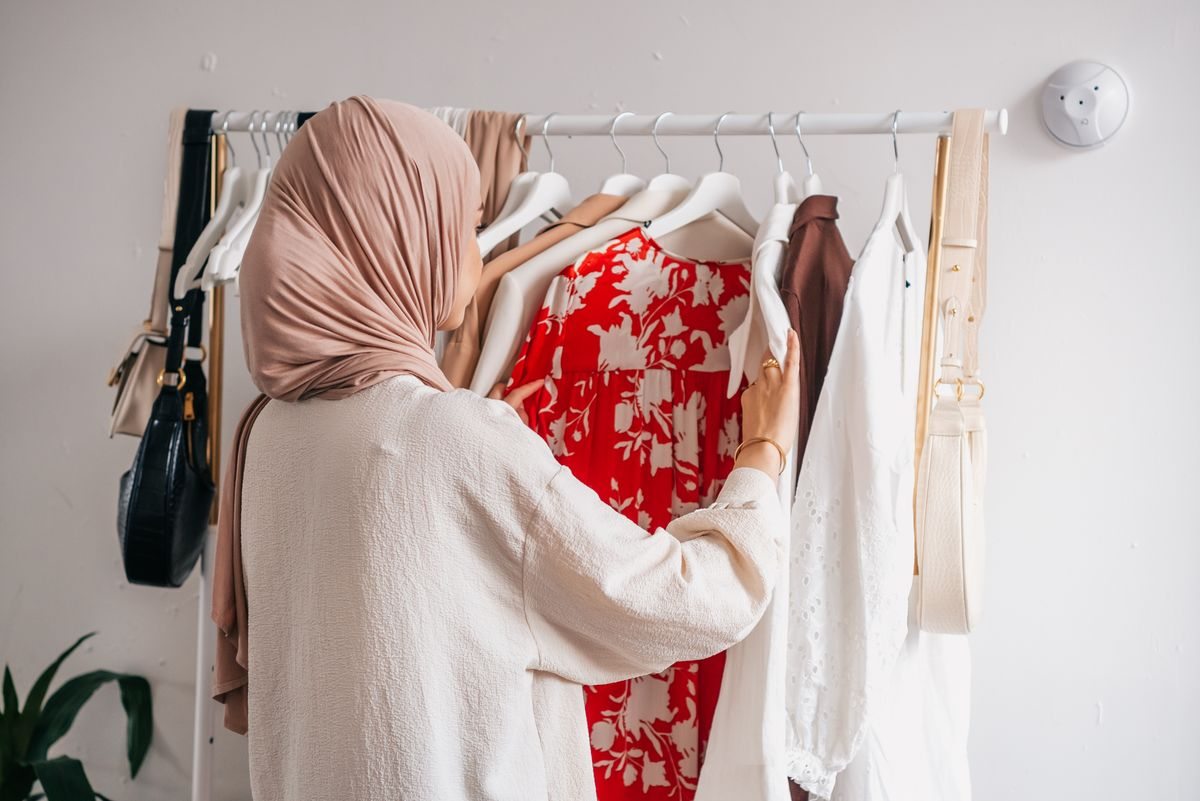
Space hangers far enough apart to see the fronts of the garments. If the rail becomes a tightly packed row of sleeves, remove the alternatives first. Keep one weather adjustment, such as a cardigan, rather than a complete second set of outfits. Fold knitwear on a nearby shelf when hanging would pull it out of shape.
Try the least familiar combination before the week begins. Discovering that a shirt bunches beneath a jacket is easier on Sunday afternoon than ten minutes before leaving. A photograph can record the successful version without requiring the clothes to remain assembled indefinitely.
The rail also needs a clear route back to the wardrobe. After wearing an item, decide whether it needs cleaning, airing or putting away. Do not return it automatically to the planning rail, where worn clothes can become indistinguishable from the next outfit. At the end of the week, clear what remains and make a fresh, small selection. If this reset feels like another chore, use three hangers inside the existing wardrobe instead. The useful part is the shortlist, not the furniture.