Choose the right reference
Use a garment whose fit you understand after wearing it, rather than something that looks right on a hanger. For trousers, choose a pair with a similar rise and intended silhouette. For a shirt, use one with the amount of ease you want. A stretchy knit is a poor reference for a rigid woven blouse even when both are called the same size.
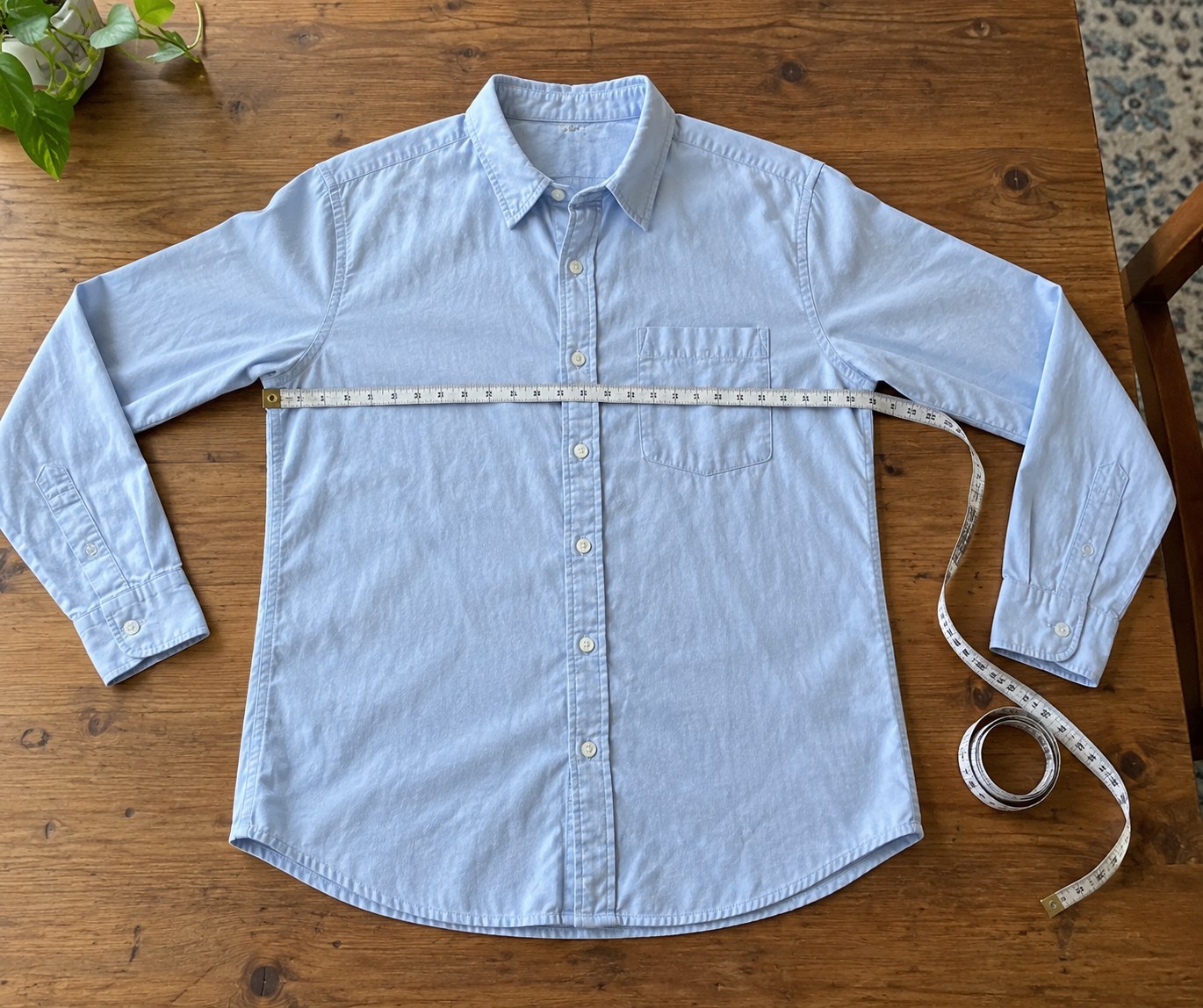
Lay the garment on a flat surface and smooth it gently without pulling. Fasten it as it would be worn. Use a flexible tape that lies flat and note the unit. Record where each measurement begins and ends; “width across chest just below the armholes” is more useful than an unexplained number.
Compare like with like
Retailers may publish body measurements, finished garment measurements or both. These are not interchangeable. A flat width across a shirt is not your body circumference, and a garment usually includes space for movement or a particular shape. Read the retailer's instructions before comparing numbers.
For trousers, useful references may include the flat waistband, rise, inside leg and width at the hem. Measure both the starting point and path consistently. For a shirt, note the chest width, shoulder arrangement, sleeve length and back length. A dropped shoulder changes where a sleeve measurement begins, so do not compare it blindly with a set-in sleeve.
Write the result alongside the garment's name and a short fit note. “Comfortable sitting, slightly long with flats” tells you more than the measurements alone. If the fabric stretches, say so. If the garment has shrunk or been altered, it can still be a useful personal reference, but it no longer represents the manufacturer's original dimensions.
Keep a small measurement record
Use one line for the item and another for the method. For example, note that the trousers were fastened, laid flat and measured without stretching the waistband. Include whether a width was measured across the front only or whether you recorded a full circumference. Photograph the tape's position if you expect to repeat the measurement; this is often clearer than remembering which seam you used six months later.
A shirt's back length also needs a defined starting point. Some listings measure from the highest shoulder point, while others use a point at the back of the neck. Read the retailer's diagram and reproduce it on your reference garment where possible. If the two methods differ, do not treat a small numerical difference as evidence of a shorter shirt. Ask the retailer to clarify before making that comparison.
For an elastic waistband, note the relaxed measurement and whether the listing specifies a stretched measurement. Do not stretch your reference as far as physically possible and call that a comfortable fit. The force used is difficult to reproduce, and comfort depends on the elastic and the rest of the garment. A relevant size chart and a try-on remain important.
Keep only measurements that help with the purchase. If your concern is a short body length, recording ten other dimensions may add work without answering the question. A focused note can say that the current top is comfortable at the chest but needs another few centimetres of coverage when reaching. This preserves the reason for measuring, so the numbers do not become a detached set of targets you follow even when the new garment is intended to fit differently.
Use the numbers to narrow a choice
Measurements help rule out obvious mismatches; they cannot describe every aspect of fit. Fabric weight, construction and the position of shaping seams change how a garment sits. A jacket with the same chest width may feel different because the armhole is cut differently.
When a listing leaves a crucial dimension unclear, ask the retailer for that specific measurement. Sending a long set of unrelated numbers can obscure the question. One clear request, such as the finished back length in the size you are considering, is easier to answer. Keep the reference note for later purchases, but update it when your preferred fit changes. The measuring tape serves your preferences rather than setting them.