Begin with the tangles
Take jewellery out in small groups instead of emptying the entire collection into one heap. Fasten chains where appropriate and lay them separately while you decide where they belong. Do not pull a tangled chain tight to discover which end is caught. Work gently in good light or ask a jeweller for help with a delicate piece.
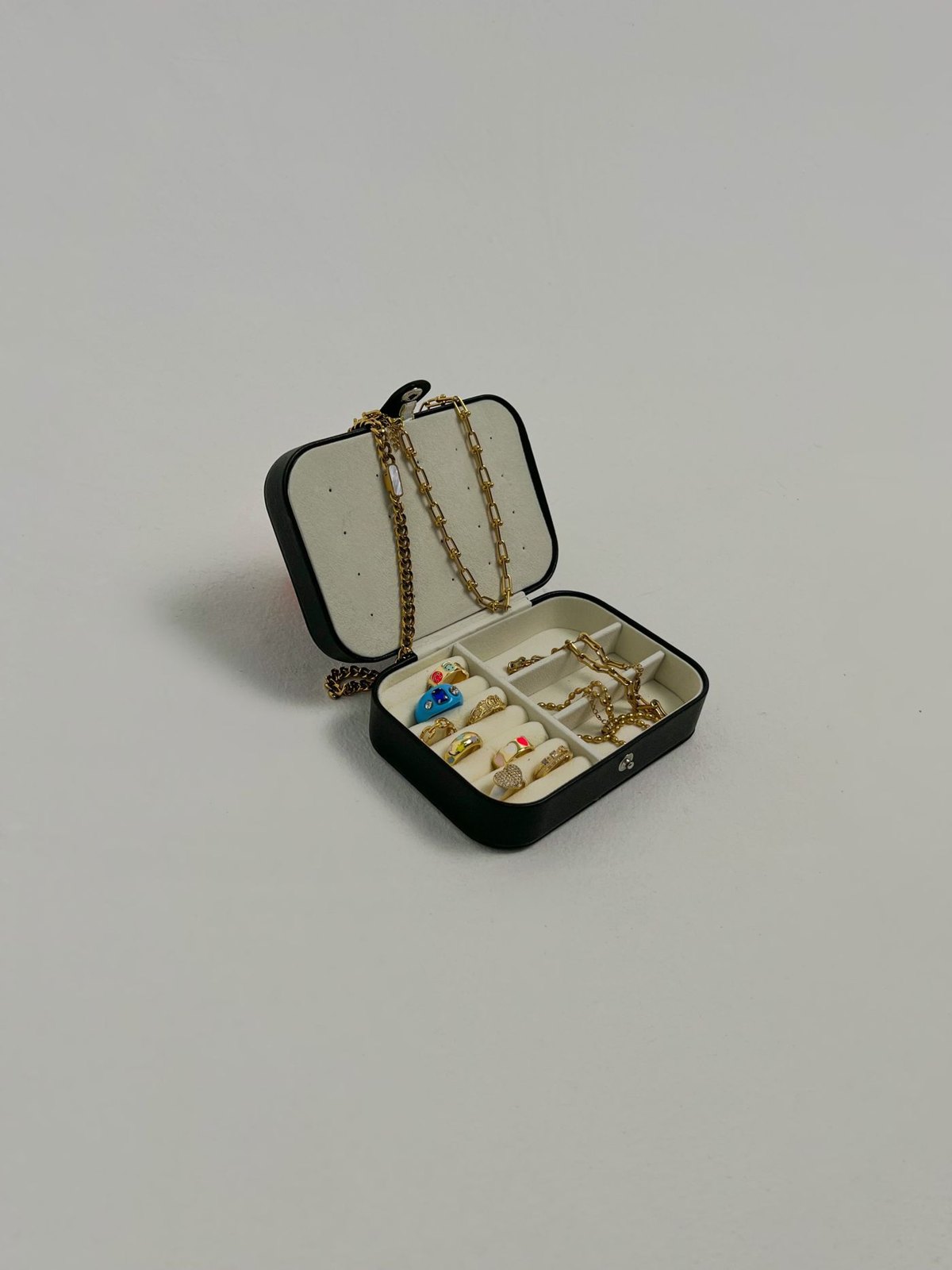
A compartment is useful when it prevents contact or makes a pair easy to find. It does not have to hold a matching collection. Earrings can stay with their backs, rings can occupy separate slots and chains can have enough room to lie without becoming a knot. Follow any material-specific storage advice from the maker, especially for softer stones, pearls or plated finishes.
Organise around getting dressed
Keep frequently worn pieces within easy reach, with occasional pieces stored securely elsewhere. If you always compare two pairs of earrings beside the same jacket, placing them near each other may be more useful than arranging all jewellery by metal colour. The system should reflect your choices, not a shop display.
Leave a temporary place for the pieces you remove in the evening, but clear it regularly. A small tray can stop a ring disappearing on a bedside table. It should not become the long-term home of every necklace you own. Keep the location safe from children, pets and the edge of a sink.
Keep care information with unusual pieces
Save the maker's instructions where you can find them. Do not use a single polishing or cleaning method across every material without checking. An attractive box does not tell you whether a piece should be kept away from moisture, a particular product or contact with another surface.
Check clasps and loose components before returning a piece to the ready-to-wear section. Put repairs in a labelled pouch with the required action, such as having a clasp inspected. A broken earring mixed with wearable pairs only creates the same disappointment each morning.
If the box is full, edit before buying more storage. There may be pieces you no longer want, duplicates of a role or items held for sentimental reasons. Those decisions can lead to different places. Keeping a memory is valid, but it does not need to occupy the small compartment you use every day.