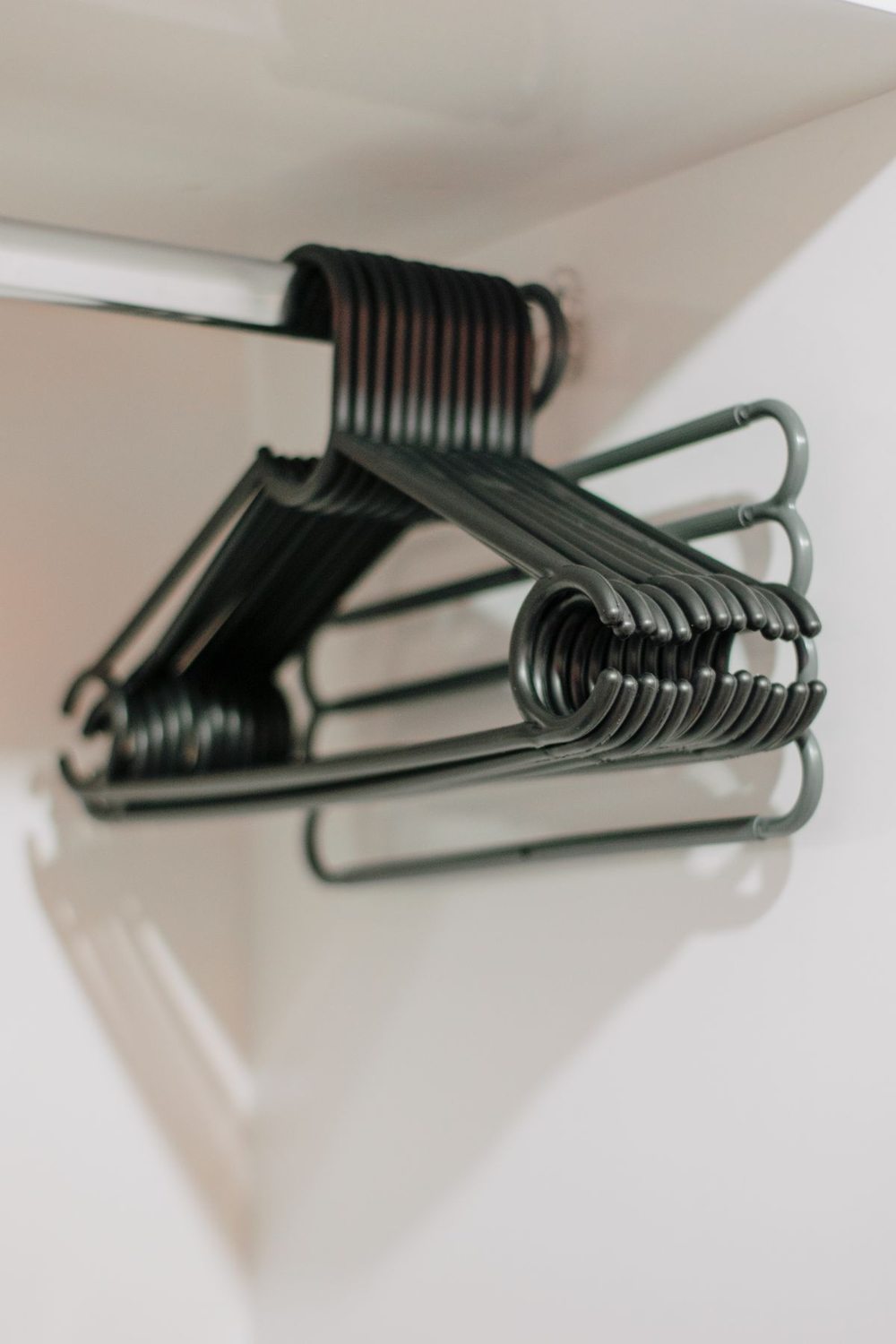
Look at the weight first
A hanger supports a garment at a few relatively narrow points. A heavy, stretchy knit may pull against those points and lose its shape over time. Where the item's instructions allow, folding it on a shelf can be a better use of space than suspending it by the shoulders.
Woven shirts, many jackets and garments that hold creases may benefit from hanging, but construction matters. A jacket needs support that follows its shoulders; a very thin wire hanger may leave it slumped or marked. Use the garment's own hanging loops when provided and appropriate, rather than assuming delicate straps should carry its full weight.
Fit the hanger to the garment
A hanger that is too wide can push into the sleeve, while one that is too narrow may fail to support the shoulder. Place the garment carefully and check where the ends sit. Fasten enough buttons to keep it in place without stretching the neckline as you put it on.
For trousers, choose between folding over a smooth bar and using suitable clips according to the fabric and available length. Clips can mark delicate material, so inspect the contact area rather than treating every pair identically. Avoid cramming several garments onto one hanger if it makes the lower ones invisible or difficult to remove.
Use the rail without crowding it
Allow enough space to move clothes sideways and take one out cleanly. A tightly packed rail can crease garments even when hanging would otherwise protect them. Move items that are better folded before buying a slimmer hanger purely to squeeze more in.
Keep a small number of empty hangers together so they are easy to find when clean clothes return. Leaving them scattered between garments can make the rail look fuller than it is and catch on sleeves during a hurried search.
Make occasional clothes easy to retrieve
Clothes kept for ceremonies, interviews or infrequent work events can remain on the rail without occupying its most convenient section. Give them adequate support and protection appropriate to their material. Keep accessories stored separately if their weight could distort the garment or their edges could catch it.
Check an occasional piece before the day you need it. A jacket may require attention even after a quiet period in storage, and a missing button is much easier to address with time available. The point of careful hanging is to keep a garment usable, not to assume it needs no further inspection.
If you use a garment cover, choose one suited to the item and storage conditions. Do not leave newly damp clothes enclosed. Keep the wardrobe dry and avoid pushing the protected garment so tightly between other pieces that its shoulders or sleeves are compressed.
A photograph or a short note can identify what is inside an opaque cover. This is particularly helpful when several similar covers are stored together. It keeps the protected clothing part of your visible inventory without requiring you to unzip everything whenever an occasion appears.
Check the result later
Storage choices are not permanent. If a shoulder develops a bump, a trouser fold becomes too pronounced or a dress pulls at its straps, reconsider the support. Follow any specific instructions supplied with the item and ask a garment-care professional when a valuable or unusually constructed piece needs special handling. The rail should preserve a garment's usable shape, not simply keep it off the floor.