Wear it for more than a photograph
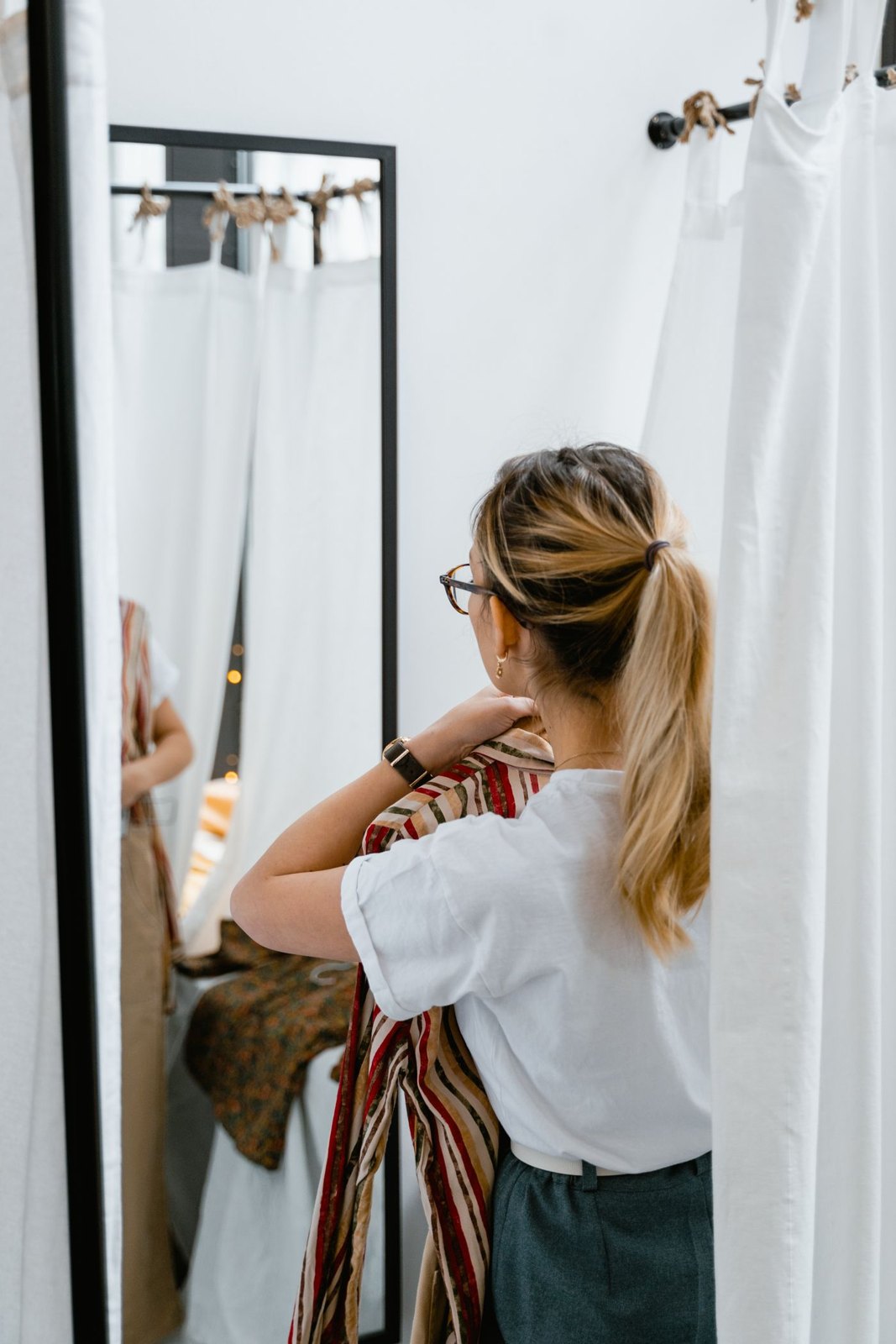
The first view in the mirror can tell you whether you like a garment. It says less about whether you will enjoy wearing it for several hours. Once the initial impression is good, spend a little time moving as you normally would. Sit down, take a few steps and reach forward. A shirt that pulls across the back only becomes obvious when your arms leave your sides.
Check the garment with its intended layers. A coat tried over a thin T-shirt may feel different over your usual knit. Trousers can sit differently with a tucked shirt, and a dress neckline may change when you wear the underlayer you prefer. Bringing one relevant item is often more helpful than trying to imagine the whole outfit.
Look at the side and back where mirrors allow. Notice whether seams hang as intended, pockets flare or a waistband rolls when you sit. Some folds are part of a relaxed cut; others indicate that the shape is pulling. You do not have to eliminate every crease to find a comfortable fit.
Separate adjustment from compromise
Try a neighbouring size if available, even when the label is not the one you usually choose. Compare comfort and movement rather than assuming a closer fit is automatically better. The same garment may create two different silhouettes in two sizes. Decide which version you actually want to wear.
An alteration can be worthwhile, but do not treat it as an invisible final step. A simple hem and a change to the shoulder structure are different jobs. Ask an alterations professional about feasibility and cost before relying on a repair to make an expensive purchase work. If the return period will matter, check the retailer's current terms before changing or wearing the item.
A trouser try-on in three views
Start at the waistband without tightening your posture. If it feels comfortable standing, sit on an appropriate seat and notice the change. Check whether the fastening presses, the back slips down or the fabric pulls across the hips. Then stand again and see whether the trousers return to their original position. If you have to rebuild the fit after every movement, try another size or cut rather than assuming the problem will disappear at home.
Next, look at the leg while wearing the intended shoes. A narrow hem may catch on a boot shaft, while a wide one may cover more of a flat shoe than expected. Walk a few steps and look at the back of the hem. Decide whether the length is usable as it is or needs an alteration, and include that work in the purchase decision.
Finally, put something representative in a pocket only if the shop permits it and the garment is designed for that use. A phone can reveal that a pocket opening pulls or that the cloth shows every edge. You might still choose the trousers and carry the phone in a bag, but that is a conscious adjustment rather than an annoyance discovered later.
For a top, use a different sequence. Reach forward, raise an arm to a comfortable height and check the neckline when bending slightly. The purpose is not to perform extreme movements that the garment was never designed for. It is to reproduce the ordinary actions of your day. A fitted evening top and an everyday work shirt can be judged against different uses without either needing to pass an identical test.
Read the less visible details
Look at fastenings, lining, pockets and care instructions. Can you manage the fastening yourself? Does the lining show when you move? Is the pocket opening large enough for what you use it for? These are not glamorous questions, but they explain why apparently similar clothes get worn very differently.
Finally, step away from the most flattering pose. Stand normally, relax your shoulders and ask whether the garment still feels like something you would choose on an ordinary morning. If it needs constant adjusting before you have left the fitting room, that work is likely to follow it home.