Bring the hem to the boot
Boot shopping becomes easier when the clothes arrive with you. A shaft that looks well proportioned beneath a short skirt may catch the hem of a midi skirt. An ankle boot can sit neatly inside one pair of trousers and create a ridge beneath another. Try the combination you are buying for before judging the boot on its own.
With trousers, let the fabric fall naturally over the shaft. Walk and sit down. Does the hem return to its original position when you stand, or does it remain perched on the top? Narrow trousers sometimes need a slimmer shaft; wider ones may simply need a different length. Tucking every hem inside is not a solution if you dislike that look.
Allow for movement
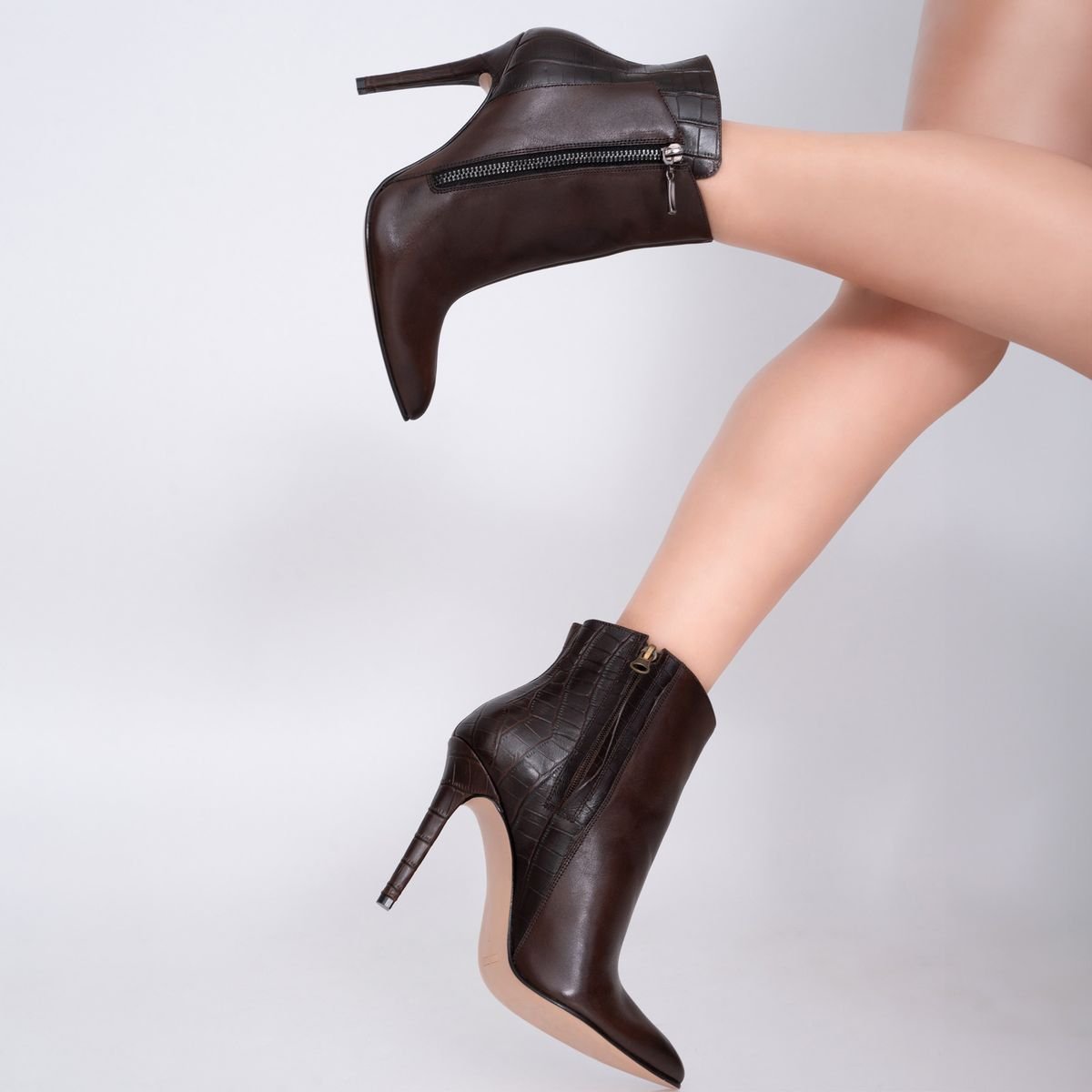
A tall boot should allow you to sit without the upper edge digging behind your knee. Check it in a chair as well as standing beside a mirror. Zip it carefully without forcing fabric or skin towards the fastening. If you plan to tuck in jeans, try those jeans rather than assuming that the empty space will be enough.
Look at the shaft from the side. Some boots are designed to stand away from the leg; others follow its outline. A gap is not automatically a fitting fault. What matters is whether the boot stays where it should and feels comfortable as you move. Avoid treating a particular calf shape as something the footwear must disguise.
Choose the visible interval
With a skirt, compare a little visible leg with a hem that overlaps the boot. The first makes a clear break; the second can create a longer continuous line. Tights change the contrast again. Dark tights and dark boots may make the interval less noticeable without changing either garment.
Try turning up the skirt hem temporarily to see whether a small length change solves the proportion. This is useful information even if you do not intend to alter it. You may decide to buy a different boot instead. Leave the shop knowing which actual outfits it works with, rather than carrying home a pair that requires a new set of clothes.