Check the loops before the mirror
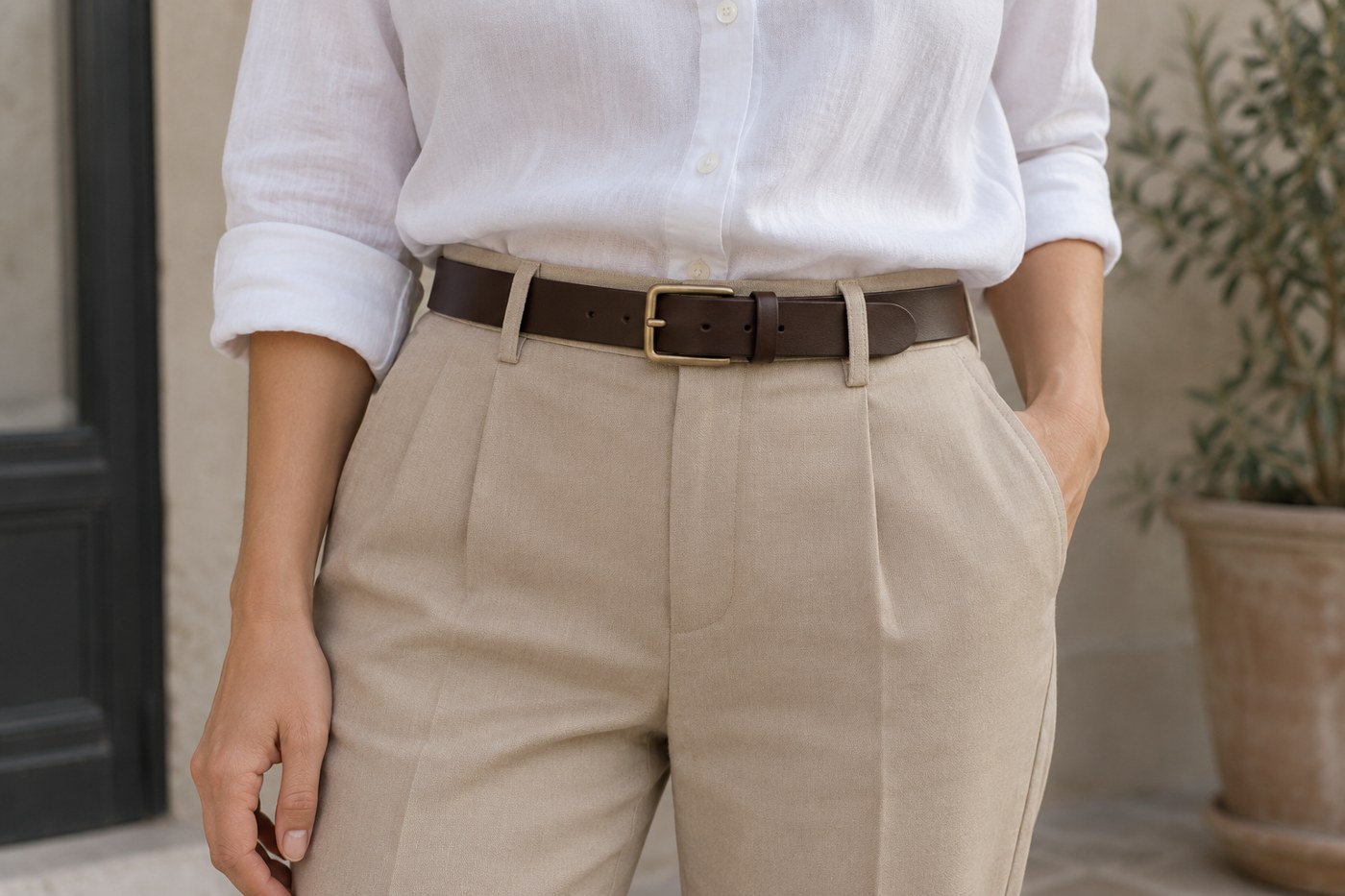
Thread the belt through the actual trousers or skirt you intend to wear. It should pass through without forcing or folding the leather or fabric. A belt that almost fits can become awkward every time you dress, even if the width looks appealing in the outfit.
Look at the buckle and the end as well as the strap. The fastening needs to work with the waistband, and the spare end should sit where you can manage it. If the buckle is bulky, sit down and see whether it presses or catches under another layer. A standing photograph does not reveal that part of the fit.
Choose the visual weight
A narrow belt can create a small line across the waist; a wider belt makes a larger interruption. Compare each with the trouser rise, the shirt tuck and any jacket. The same belt can look quite different when most of it is covered by a knit or when it is fully visible over a tucked shirt.
Try the outfit without a belt too. Some waistbands sit and look as you want them without another element. If the belt is mainly compensating for a fit problem, decide whether it solves that problem comfortably or simply gathers excess fabric. An alteration may be worth discussing when the trousers are otherwise a favourite.
Distinguish support from decoration
A belt holding trousers in place has a different job from one worn over a loose dress. It needs to fasten at a comfortable point and remain useful through movement. Check that the available holes or adjustment range suit you rather than relying on an improvised fastening.
Do not add holes or cut a strap unless the design and a suitable repair method support it. A leatherworker or alterations professional can advise on whether the change is sensible. A new belt that requires immediate modification may not be the best starting point if another size exists.
When choosing between two widths, wear each for a few minutes with the intended outfit. Notice whether your hand keeps adjusting the buckle or the waistband. The useful width is the one that works mechanically and visually, so the belt becomes part of getting dressed rather than another small problem to manage.